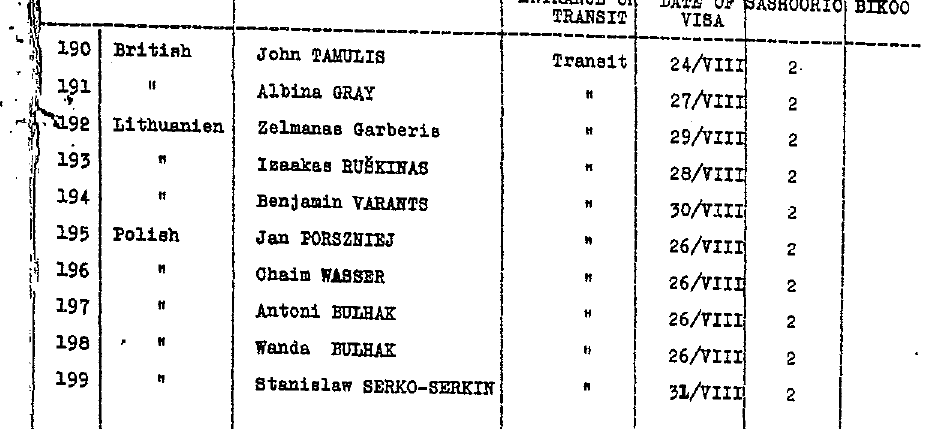
A transit visa was one link. It was worth nothing without a destination written
somewhere, a Soviet exit permit, a seat on the railway, a ship, and somebody at the
far end willing to let a stateless family off it. Each of those had its own opening
and its own closing date, and a visa issued a fortnight later or earlier ran into a
different set of them.
The first of those doors opened and shut a year before Sugihara wrote a single line.
Nobody queued in Kaunas who had not first crossed out of Poland into Lithuania, and
that crossing was only briefly a matter of walking.
The way in, from Poland
Before any of the rest of it, you had to be standing in Lithuania. That door opened and shut a year before the visas were written.
Crossing into Lithuania — while it could be done openlySeptember – mid-November 1939
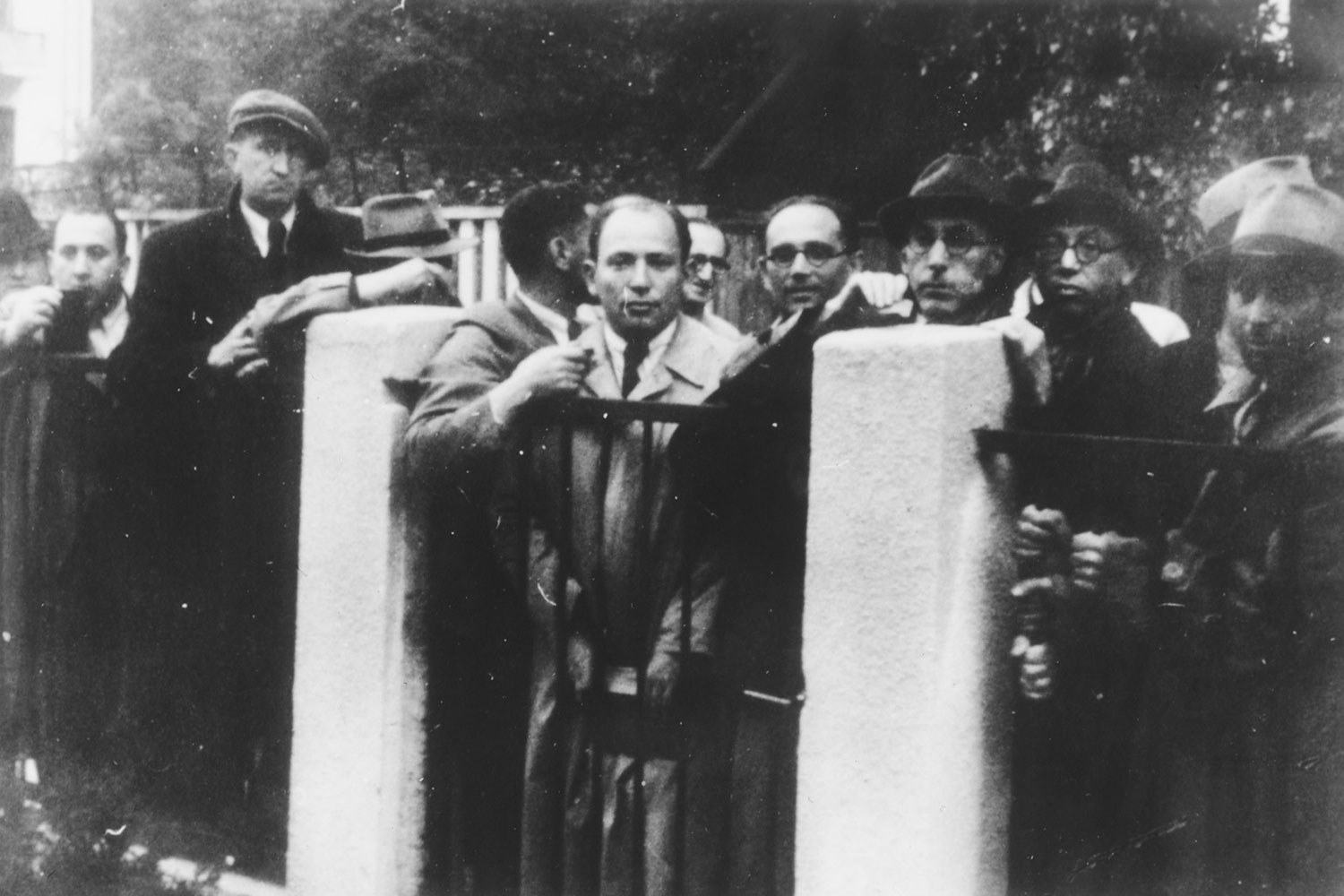
Refugees had been crossing into still-neutral Lithuania since the invasion, but the wide opening came on 10 October 1939, when the Soviet Union announced it was handing the Vilna region to Lithuania. Free movement into Vilna lasted to the end of that month, and thousands walked in out of Soviet-held Poland. The border between Lithuania and the Soviet Union was closed in mid-November.
Source: Yad Vashem, “The Story of the Jewish Community of Vilna”
Crossing into Lithuania — closed, and crossed anywaymid-November 1939 – 15 June 1940
Shut, and still crossed: the smuggling routes ran all winter, and the Lithuanian interior ministry's own registrations climb from 18,000 refugees at the start of December 1939 to about 27,000 by February 1940. The Soviet occupation of 15 June 1940 ended it. Every man and woman who later queued at Sugihara's gate had come through this door first.
Source: We Refugees Archive, “Vilnius 1939/40”
The consulates in Kaunas
Who was still issuing, and until when.
Dutch consulate, Kaunas — Curaçao endorsements22 July – 3 August 1940
Jan Zwartendijk · Nine days if you count from the refugee crowd of 24 July, eleven from the first endorsements written into Dutch passports on the 22nd. The archive does not pick between them.
Source: Jan Brokken, The Just (2021)
The Hotel Metropol — issuing after the consulate closedlate August – 4 September 1940
Chiune Sugihara · Ordered out with the other foreign missions, he moved to a hotel and went on writing until he left the city.
Source: Yukiko Sugihara, Visas for Life (1995)
The road east
The Soviet exit permit, the railway, the ships — a visa was only as good as the next leg.
Soviet exit permits, sold through Intouristautumn 1940 – 22 June 1941
Payable in hard currency, which is why the Joint's money mattered as much as the visas did.
Source: Zorach Warhaftig, oral history
Trans-Siberian: Moscow to Vladivostoklate October 1940 – 22 June 1941
Ten or eleven days in a closed train, then about six days waiting at the port. Closed for good when Germany invaded the Soviet Union.
Source: Zorach Warhaftig, oral history
Vladivostok to Tsuruga, across the Sea of Japanlate October 1940 – 22 June 1941
Saburo Nei, consul at Vladivostok · The last checkpoint before the ship. Nei let refugees board on irregular and expired papers.
Source: Flight and Rescue
The gates at the far end
Where a ten-day transit stay could be turned into somewhere to live.
United States immigration visas issued at Kaunasuntil the consulate closed, late summer 1940
A few dozen in all before the consulate closed — the Polish quota was small and long oversubscribed. A transit visa was the common paper precisely because this one was not obtainable.
Source: The safe-conduct pass of Markus Nowogrodzki
Onward destination visas from the Polish embassy in Tokyowinter 1940 – autumn 1941
Ambassador Tadeusz Romer · Around a thousand refugees were found a final destination this way. The rest were sent on to Shanghai.
Source: “The Curaçao Visa”, Netherlands Embassy in Tokyo
Shanghai — the destination for those who got no otherthe second half of 1941, and the rest of the war
Roughly 1,100 were moved on from Japan in the second half of 1941, and stayed for the rest of the war.
Source: “The Curaçao Visa”, Netherlands Embassy in Tokyo
Oct 1939Jan 1940AprJulOctJan 1941AprJulOct