His name is on the visa, but the escape from Kaunas was a relay — diplomats, refugees
and aid workers who each held one link of the chain. These are the others.
Chiune Sugihara’s transit visa only worked because others made a destination,
carried the loophole, kept the border open, and fed and moved thousands once they were through. The
whole archive tells his story; this page credits the rest of the chain.
ConsulOfficialRefugee & organiserAid network
🇳🇱 Dutch honorary consul · Kaunas
Jan Zwartendijk 1896–1976
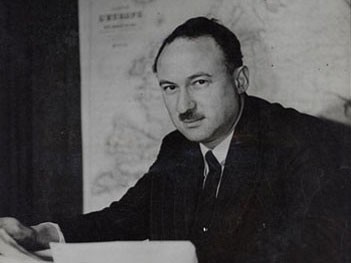
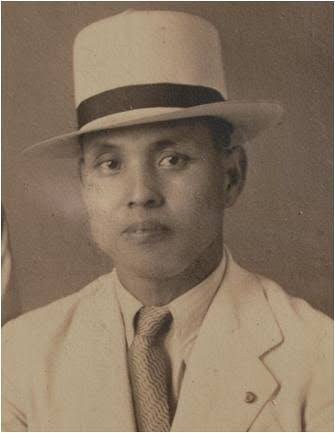
Director of the Philips works in Kaunas and, from May 1940, the Dutch honorary consul. In days he wrote some 2,345 Curaçao endorsements — the “visa to nowhere” that gave a refugee a destination to show Sugihara. He feared for the rest of his life that he had sent them to their deaths, and died in 1976 without learning that almost all had survived. No roll of the recipients remains: his young son, entrusted in Kaunas with the only list, burned it as too dangerous to keep — which is why Zwartendijk's visas can be counted but not named (USHMM Flight and Rescue, RG-50.494.0014).
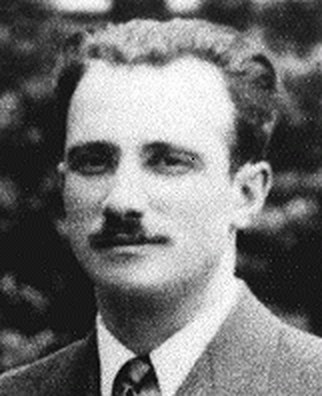
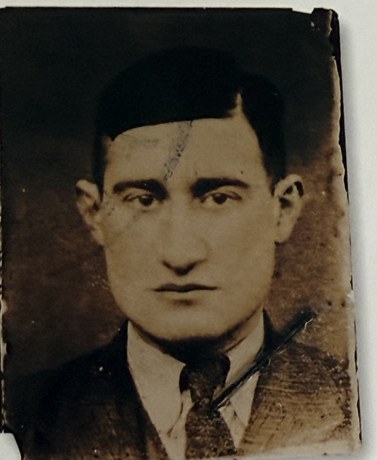
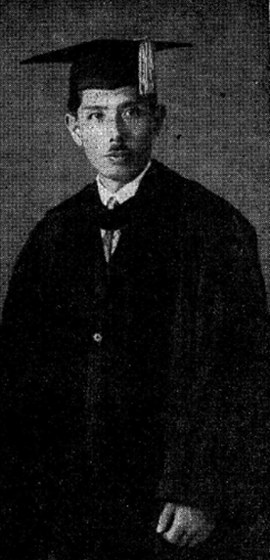
Born in Vilna on 20 November 1913; in 1916 his family fled the coming revolution for Harbin, the Russian-Jewish city in northern China, where he learned Hebrew and joined a Zionist group. As Manchuria fell to Japan he was sent on to Shanghai — English at a British school, and service in the Shanghai Volunteer Corps that guarded the city’s foreign residents — and in 1937 a textile firm posted him to Kobe, whose small Jewish community elected him its honorary secretary. So it was Hanin’s committee that met the Sugihara refugees off the ships at Tsuruga in 1940–41, on Joint funds under president Anatole Ponve: finding them homes, clothing and medicine, and arranging the papers that let them stay in Japan. He returned to Shanghai in 1942 for the rest of the war, went to Israel in 1948, and later settled in the United States. His account is in the USHMM Flight and Rescue collection.
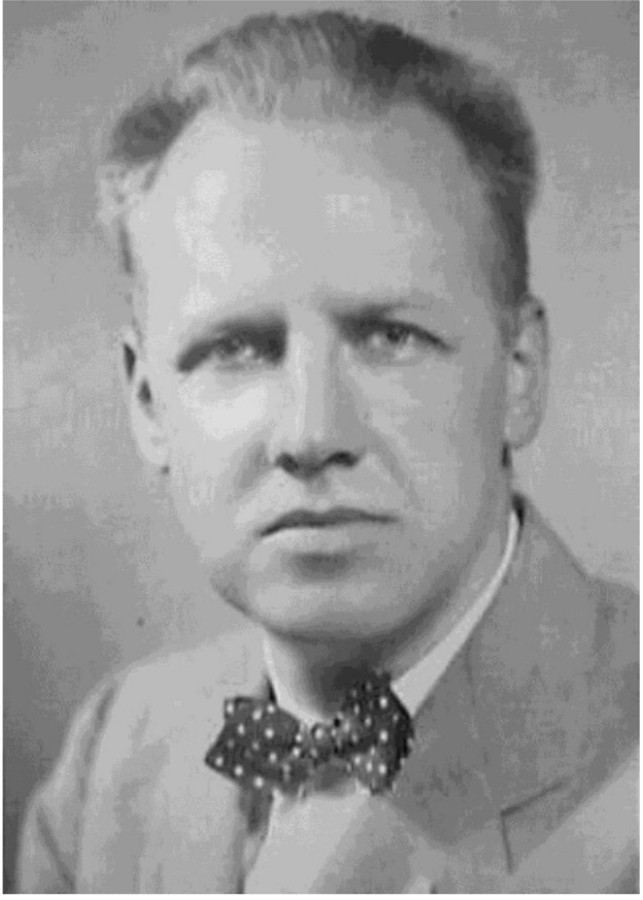
The American Joint Distribution Committee’s man in Lithuania. Sent to Kaunas and then Vilna in 1939, he ran the relief that kept tens of thousands of refugees alive while they searched for a way out — group homes, soup kitchens, clothing, and the funds (some $575,000 for Lithuania) that paid the Intourist fares and Trans-Siberian tickets the visas alone could not buy. He left in February 1941; after the war he rose to direct the Joint’s worldwide operations (1951–55).
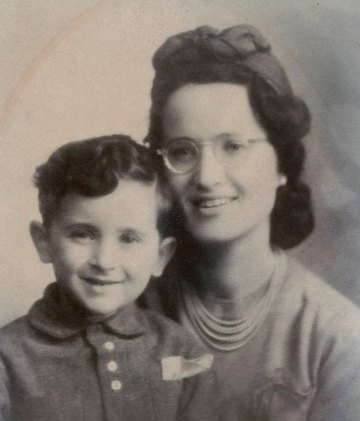
In July 1940 she asked Ambassador de Decker to certify that Curaçao required no visa; he stamped it into her passport, Zwartendijk copied the wording for her family, and Sugihara issued their transit visas. What that persistence bought was her household: her husband Isaac, their small son Nathan, her mother Rachel and her brother Levi. The archive used to say word spread from her case to thousands. It did not — the lines outside the Dutch consulate began elsewhere, and the correction belongs on the record.
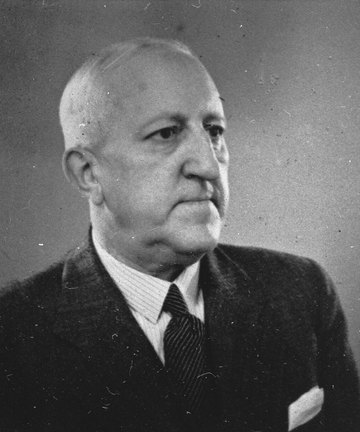
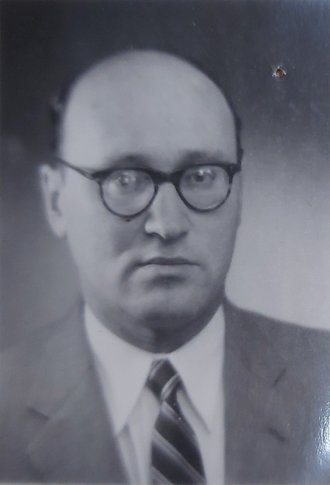
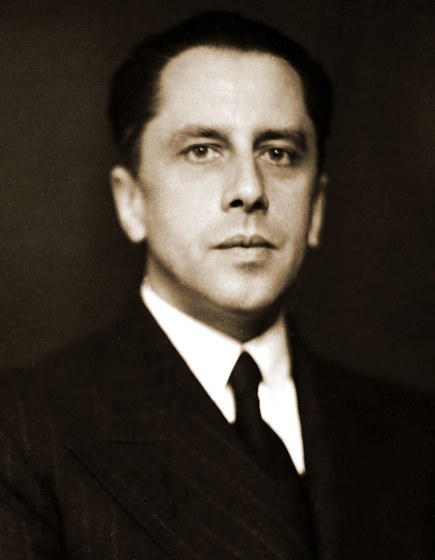
The Dutch ambassador in Riga who wrote the sentence that made the whole thing work — that no visa is required for Curaçao — leaving out that admission still lay with the colonial governor. He is the man who cut that half of the standard text; whose idea it was that he should is not settled, and is credited variously to Pessla Lewin and to Nathan Gutwirth. What is clear is that he authorised the wording only for a handful of Dutch nationals; the thousands that followed were Zwartendijk’s own risk.
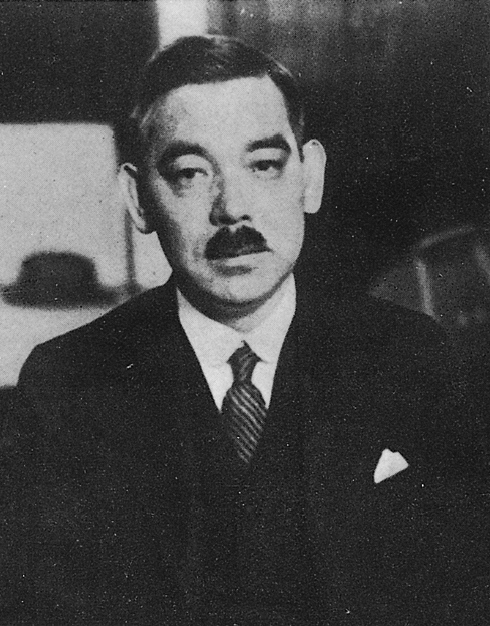
Japan’s Foreign Minister from July 1940, at the head of the ministry whose cables set the conditions Sugihara worked under. The instructions were restrictive — a real destination visa, funds for the onward journey — yet Japan honoured the transit stamps and let thousands cross its territory rather than turn them back, and it declined to adopt its Axis partner’s measures against the Jews. He is a hard man to place: in the same months he brought Japan into the Tripartite Pact with Germany and Italy, and he died in 1946 awaiting trial in Tokyo. But the refugees passed through the country he ran — and survivors, George Bluman among them, count that in his favour.
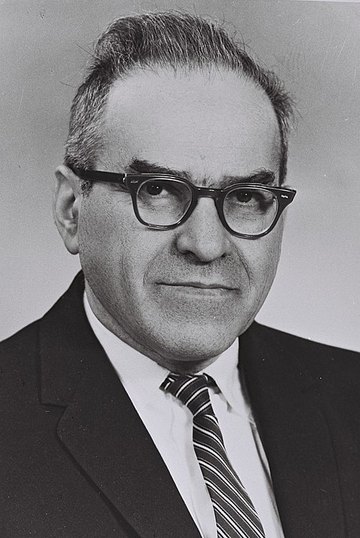
The refugee lawyer who saw what Nathan Gutwirth’s Curaçao endorsement could become — the one person Gutwirth told. When Gutwirth won Zwartendijk’s agreement that non-Dutch refugees could have the endorsement too, Warhaftig carried the news out to the yeshivot, the shtetls and the cities, telling people to get to the Dutch consulate as fast as they could — and then organised the escape from inside it. He reached Palestine, later helped draft Israel’s Declaration of Independence, and served as a government minister.
🇳🇱 Dutch yeshiva student · Telz
Nathan Gutwirth
A Dutch student at the Telz yeshiva, and the reason the loophole stopped being a Dutch privilege. Holding his own Curaçao endorsement — copied for him by Zwartendijk on de Decker’s instruction — he told exactly one person: Zorach Warhaftig. And it was Gutwirth himself who went to the consul with the question that mattered: would he write the same thing for refugees who were not Dutch citizens? By the account given to this archive, Zwartendijk answered at once that he would give it to anyone who came to his office. That is when the lines began. Whoever first thought of leaving the colonial governor out of the wording, the question that opened the door to everyone else was his.
Sugihara’s ethnic-German secretary — and, by Moshe Zupnik’s eyewitness account, far more than a clerk: he stamped visas himself for weeks, and vouched to Sugihara to let the yeshiva students in to help, saying his sympathy for Jews traced to a woman he had loved before the war. “The world is a wheel,” he told Zupnik at their parting; “today Hitler is on top, tomorrow he might be down.” A figure of contradictions — he later returned to Germany to fight for the Reich and was never found again — his warmth in Zupnik’s memory sits against a more guarded historical record of a Volksdeutsche in a watchful post.
Rosh yeshiva · Mir
Rabbi Chaim Lejba Szmuelewicz 1902–1979
A rosh yeshiva of the Mir and son-in-law of its head, Eliezer Yehuda Finkel. He was born in Kovno on 3 October 1902 to a father who was himself a rosh yeshiva at Szczuczyn — Stutchin — and he was known in the yeshiva world as the illui of Stutchin; it is Szczuczyn, not Kovno, that the clerks at Kobe would write beside his name. When the Mir left Poland for Vilna and then scattered into four Lithuanian villages — Shat, Kroki, Krekenava and Ramygala — teaching without a licence while the authorities looked the other way, Finkel was in Palestine raising money and could not get back; Szmuelewicz and the mashgiach Yechezkel Levenstein held the school together. Sugihara entered him at line 1205 on 6 August 1940 and his wife Chana Miriam at 1203. The ledger records nothing else about him; the rest is on the Kobe paperwork, where in February 1941 the Jewish community wrote the household out in full — “Szmuelowicz Chaim Lejba, 38, Szczuczyn, Rabbi,” arrived the 13th — and set beneath him Chanai Mirian, Etel, Rafaol and Rywka. That August he heads a guarantee affidavit sworn in New York for the Mirrer Yeshiva in Kobe and Shanghai: “1) Rabbi Chaim Szmulewicz, Dean, and his wife and children.” Nineteen men on the register are annotated as rabbis of the Mir; one of them is the Dean. Bluman and Kitade give his destination as the United States — and by Yad Vashem’s account, citing the testimony he and his wife Miriam gave that archive, he was granted an American visa in Japan for himself and his family and gave it up, to leave when his students left. He died in Jerusalem in 1979.
One of the Mir students who engineered the escape. By his own later testimony he was among the boys who carried the passports to Zwartendijk for the Curaçao visas, then talked his way into the Japanese consulate and sat for two weeks beside Sugihara’s secretary, Wolfgang Gudze, stamping some two thousand visas for his fellow students. He reached Shanghai with the yeshiva and later settled in New York, where he died in 2010; he left a detailed eyewitness account in the USHMM oral-history archive (RG-50.494.0007).
🇯🇵 Japanese consul · Vladivostok
Saburo Nei
The Japanese consul in Vladivostok — the last checkpoint before the ship to Japan. He let refugees board despite irregular or expired paperwork, keeping the route open at its final gate.
🇵🇱 Polish ambassador · Tokyo
Tadeusz Romer 1894–1978
Poland’s ambassador to Japan from 1937. As the Sugihara refugees began landing at Tsuruga in 1940 he founded, in October, the Polish Committee to Aid War Victims, with branches in Kobe and Tokyo and his wife Zofia as its chair, to meet them off the ships — housing, funds, and the papers that let them stay. Japan allowed the refugees only ten days; Romer persuaded the authorities to let them remain far longer, negotiated entry visas with Britain, Palestine, the United States, Canada and the South American states, and issued fresh passports to those who needed them. Around one thousand received a final destination visa through his efforts; the rest were sent on to Shanghai, where — after the Tokyo embassy closed in 1941 — he followed to look after the Polish citizens expelled there. He sailed with them: his daughter Renia Romer records that he took passage on the refugees’ own ship, while his family travelled on another. He went on to be Poland’s ambassador to the USSR and then foreign minister of the government-in-exile in London, and after the war emigrated to Canada.
In March 1941 seventy-four refugees reached Tsuruga holding Sugihara’s transit visas but no Curaçao endorsement — Zwartendijk’s consulate had closed — and were refused permission to land. Their ship was turned back towards Vladivostok. With time running out, Nathan Gutwirth and Levie Sternheim appealed to the Dutch consul in Kobe, and Gutwirth showed him the letter from Ambassador de Decker that had authorised Zwartendijk’s wording. De Voogd knew that acting without the approval of his superior, envoy J. C. Pabst in Tokyo, could bring a reprimand. “This is sufficient for me,” he said. He handed over official consular stationery; the declarations were typed at JEWCOM; and he stamped and initialled each one, certifying that the holders needed no Dutch visa for Curaçao and the other Netherlands West Indies. A message reached the captain before Soviet waters and the ship turned back. On 23 March the seventy-four landed. Gutwirth never forgot it: “In this moment, Mr de Voogd showed a great humanity.” — account written for this archive by Arlette Liwer-Stuip. He was born at Kats in Zeeland on 6 July 1899, and came to the East the long way round: a certified radio officer with the Rotterdamsche Lloyd on the Rotterdam–China–Japan run, who then read Mandarin and Japanese at Leiden and lectured at the universities of Kyoto and Osaka. That training mattered on the day: when the declarations had to reach a ship already steaming for Vladivostok, de Voogd could work the Morse key himself. He was consul at Kobe from 1940 until the Japanese placed him under house arrest late in 1941, was exchanged through Mozambique in 1942 and served the government-in-exile in London, Washington and New York; afterwards Manila, Nanjing, Beijing, Canberra and Bangkok, and from 1960 to 1964 the Netherlands’ ambassador in Tokyo. He died at Breda on 5 April 1977, and the rabbis and students of the Mir Yeshiva in Jerusalem placed a notice of mourning for him in the Nieuw Israëlietisch Weekblad. — from his nephew Hans de Vries and his son Jan de Voogd.
🇯🇵 Hebrew scholar · Japan
Setsuzo “Abraham” Kotsuji 1899–1973
A Japanese Hebrew scholar — the son of a long line of Shinto priests, and by the 1930s all but the only Hebraist in Japan — who threw himself into saving the refugees stranded in Kobe on Sugihara’s ten-day transit visas. Tipped off by his former employer, foreign minister Yōsuke Matsuoka, to work the local police rather than Tokyo, he travelled to Kobe every ten days for months, wining and dining officials to keep the visas renewed until the refugees could move on; he is thought to have helped thousands, and even published a book rebutting Nazi propaganda at great personal risk. Among those his visa-renewals sheltered was the whole Mirrer Yeshiva, some 300 students. Arrested and harshly interrogated by the wartime authorities for his help to the Jews, he converted to Judaism after the war, took the name Abraham, and told his story in the memoir From Tokyo to Jerusalem (1964); he is buried, by his own wish, on Har HaMenuchot in Jerusalem. His part was slow to be honoured — only recently did the Israel–Japan Inter-Parliamentary Friendship Association issue the first official Israeli recognition of his work, a certificate a Knesset delegation carried to his daughter, then in her nineties, in Japan, some eighty years on. The actor Jundai Yamada, who has spent decades researching and commemorating him, tells his story in Kotsuji’s Gift.
🇯🇵🇨🇳🇺🇸 Kobe · Shanghai
The aid networks
No individual could feed and move thousands. The Kobe Jewish Community (Jewcom), the American Jewish Joint Distribution Committee (JDC) and HICEM, and the Jewish community of Shanghai housed, funded and forwarded the refugees at every stage — much of it recorded in the telegrams now in this archive.
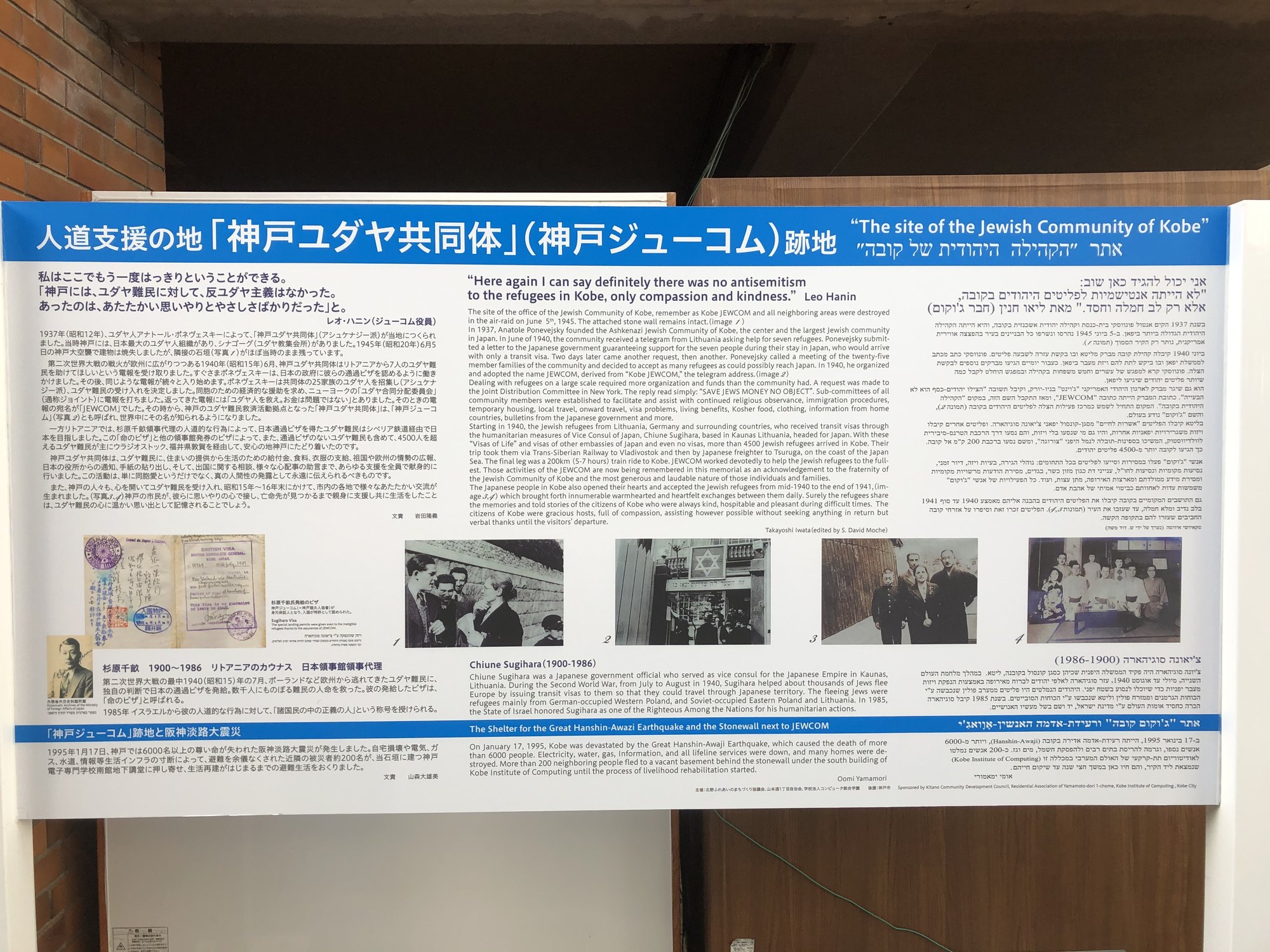
The trilingual memorial marker at the former site of the Kobe Jewish Community (Jewcom), quoting its honorary secretary Leo Hanin — “there was no antisemitism to the refugees in Kobe, only compassion and kindness” — beside a reproduction of Sugihara’s visa and the community’s own photographs. Marker at Kitano-chō, Kobe.
Accounts drawn from the sources gathered on the Resources page, including
Jan Brokken’s The Just. Corrections and additions to this cast are welcome — please
get in touch.