Szefner Boruch
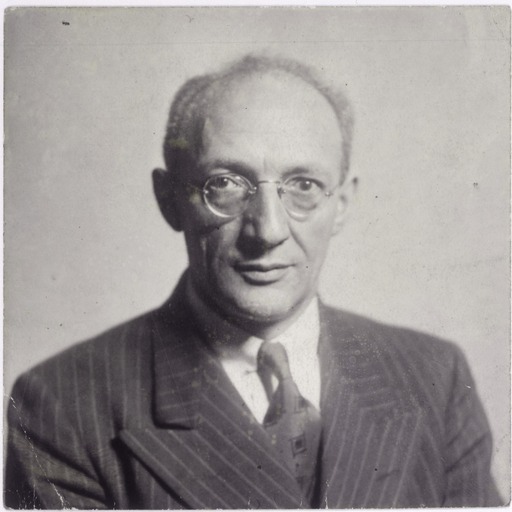
Szefner Boruch received transit visa no. 1947 at the Japanese consulate in Kaunas on 19 August 1940. The register records journalist, aged 47.
Documents
Click a document to see it larger.
What the register records
- Nationality as recorded
- Polish
- Age in 1940
- 47
- Occupation
- Journalist
The journey
Reached Japan; aided by the Polish ambassador Tadeusz Romer; registered in Kobe for USA.
What is known
Boruch Szefner, president of the Yiddish Writers' Union in Warsaw and correspondent for the Bund daily Volkszeitung, was evacuated to Vilna and after the Soviet takeover of Lithuania hid under the assumed name Izak Braude. He received two Sugihara visas (#1947 and #1814) under both his real and assumed names, plus an American visa arranged by the Jewish Labor Committee. He left Lithuania for Japan in February 1941 and sailed to the United States on the Kamakura Maru in late April 1941, where he became a staff writer for the Jewish Daily Forward.
One of two Sugihara visas issued to Boruch Szefner, this one under his assumed name Izak Braude, which he used to hide from Soviet authorities after the takeover of Lithuania.
Boruch Szefner, president of the Yiddish Writers' Union in Warsaw and parliamentary correspondent for the Bund daily Volkszeitung, was evacuated to Vilna at the war's outbreak. As an outspoken critic of Communism he hid under the assumed name Izak Braude after the Soviet takeover. He received two Sugihara visas (#1947 and #1814) under both his real and assumed names, and left Lithuania for Japan in February 1941, later sailing to the U.S. where he wrote for the Jewish Daily Forward.
He also received two Sugihara visas (#1947 and #1814) under both his actual and assumed names. They sailed to the United States on the Kamakura Maru in late April 1941.
He also received two Sugihara visas (#1947 and #1814) under both his actual and assumed names.
He also received two Sugihara visas (#1947 and #1814) under both his actual and assumed names. Boruch left Lithuania for Japan in February 1941 where he was again able to assume his real identity.
Where this comes from
- "California, San Francisco, Passenger Lists, 1893-1953", FamilySearch — index entry for Boruch Szefner, 1941: born about 1894, Poland. Digitised from NARA microfilm publication M1410 (passenger lists of vessels arriving at San Francisco)…
FamilySearch's index of the San Francisco passenger lists, read by the archive on 20 September 2026, has Boruch Szefner, born about 1894 in Poland, arriving at San Francisco in 1941. The register's compiled line gives 1893, and the two are 1 year apart. The name occurs once on the register, and a Polish-born passenger landing at San Francisco in 1941 fits the route through Japan, so the entry is taken as this person's under the archive's rule of 19 September 2026 for records from the route. - Manifest of alien passengers, SS Kamakura Maru, sailing from Yokohama March 27th 1941, arrived San Francisco April 10th 1941 (US National Archives, M1410, film 369; read on FamilySearch's copy)
He reached San Francisco on 10 April 1941 on the Kamakura Maru from Yokohama, a journalist travelling on an American visitor's visa issued at Kaunas on 22 July 1940, going to N. Chanin at 175 East Broadway, New York, according to the passenger list held by the National Archives (FamilySearch's copy). - Forverts (New York), 17 April 1941 (National Library of Israel, Historical Jewish Press)
Boruch (Baruch) Szefner, a well-known Jewish socialist journalist, came to America in April 1941 with a group of Jewish political refugees from Poland who had travelled from Vilna across Siberia and Japan, rescued by the Jewish Labor Committee (Forverts, New York, 17 April 1941; National Library of Israel, Historical Jewish Press). - Yad Vashem Archives, Jerusalem — the card file of Jewish refugees from Poland who found refuge in various countries, 1939–1941
Yad Vashem's card file of Jewish refugees from Poland who found refuge in various countries, 1939–1941, has a card for Boruch Szefner, who was in Wilno during the war. The archive attaches it under its rule of 19 September 2026: the card file is a record of the refugees in Wilno, where the road through Sugihara's visas began; the full name occurs once on the register; and the card places the person in Wilno in 1939–41, on the road to Sugihara's visas. Credit: Yad Vashem Archives. - Collections Search - United States Holocaust Memorial Museum
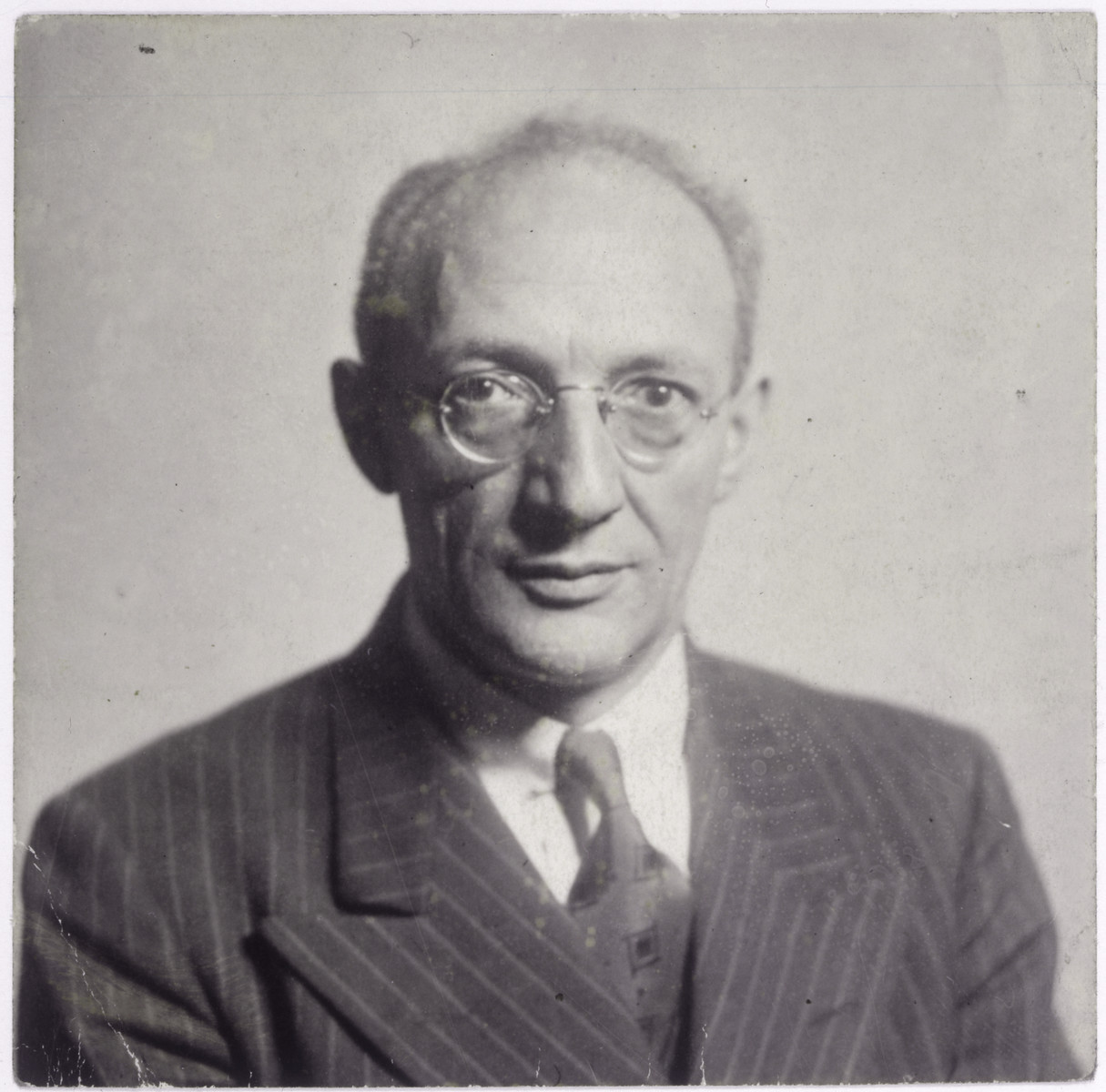
- Boruch Szefner, studio portrait, before 1939 — United States Holocaust Memorial Museum, Photo Archives pa1117008, courtesy of Markus & Mary Nowogrodzki. The museum's caption: the father-in-law of Markus Nowogrodzki; he came to Japan on a…