Melamedowicz Fejga
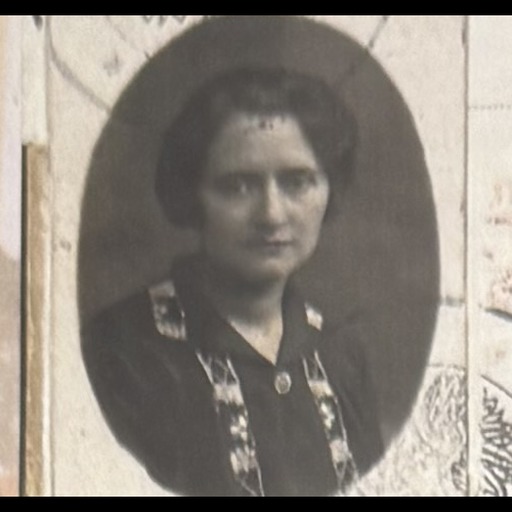
Melamedowicz Fejga received transit visa no. 1758 at the Japanese consulate in Kaunas on 14 August 1940. Aged 29 in 1940.
Documents
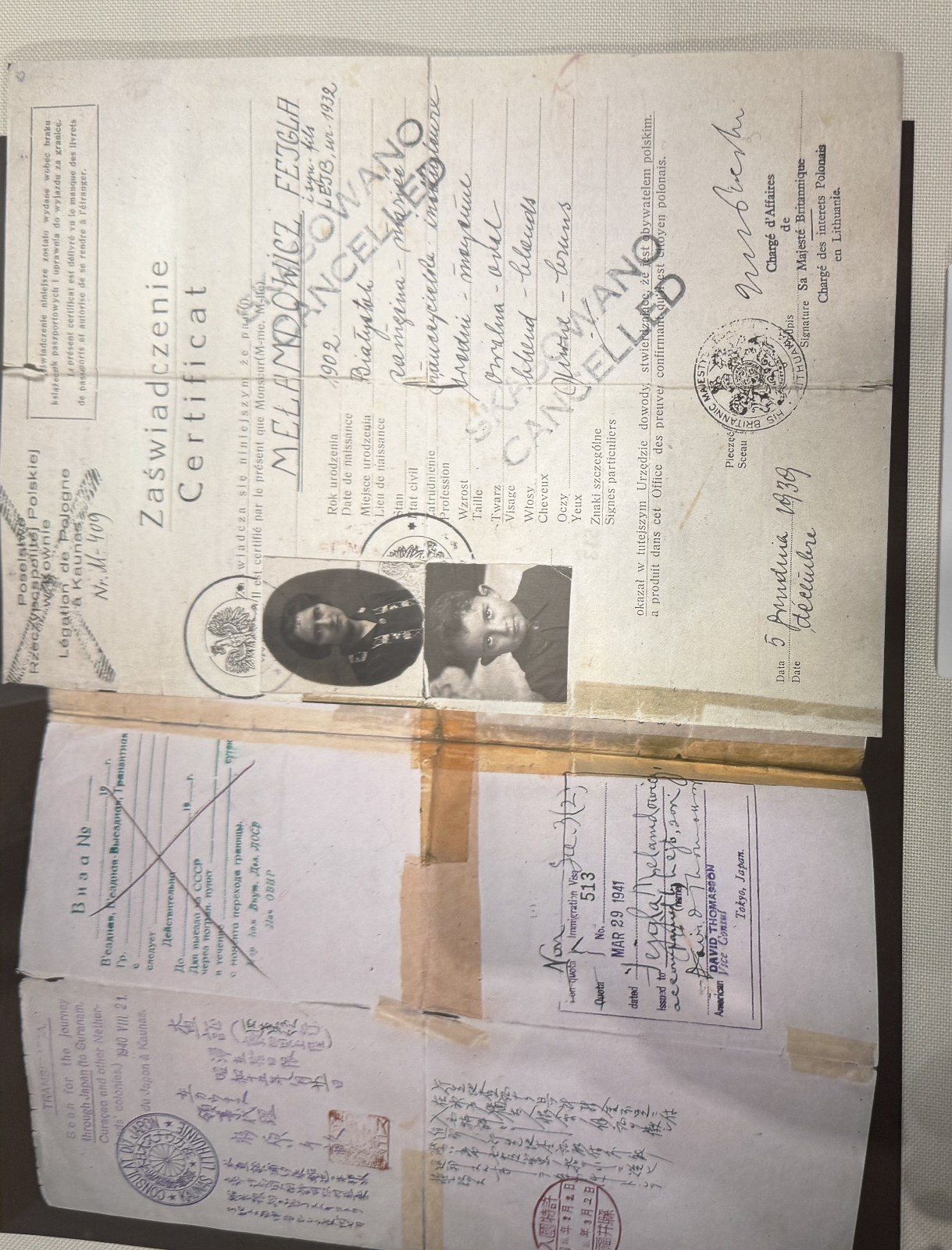
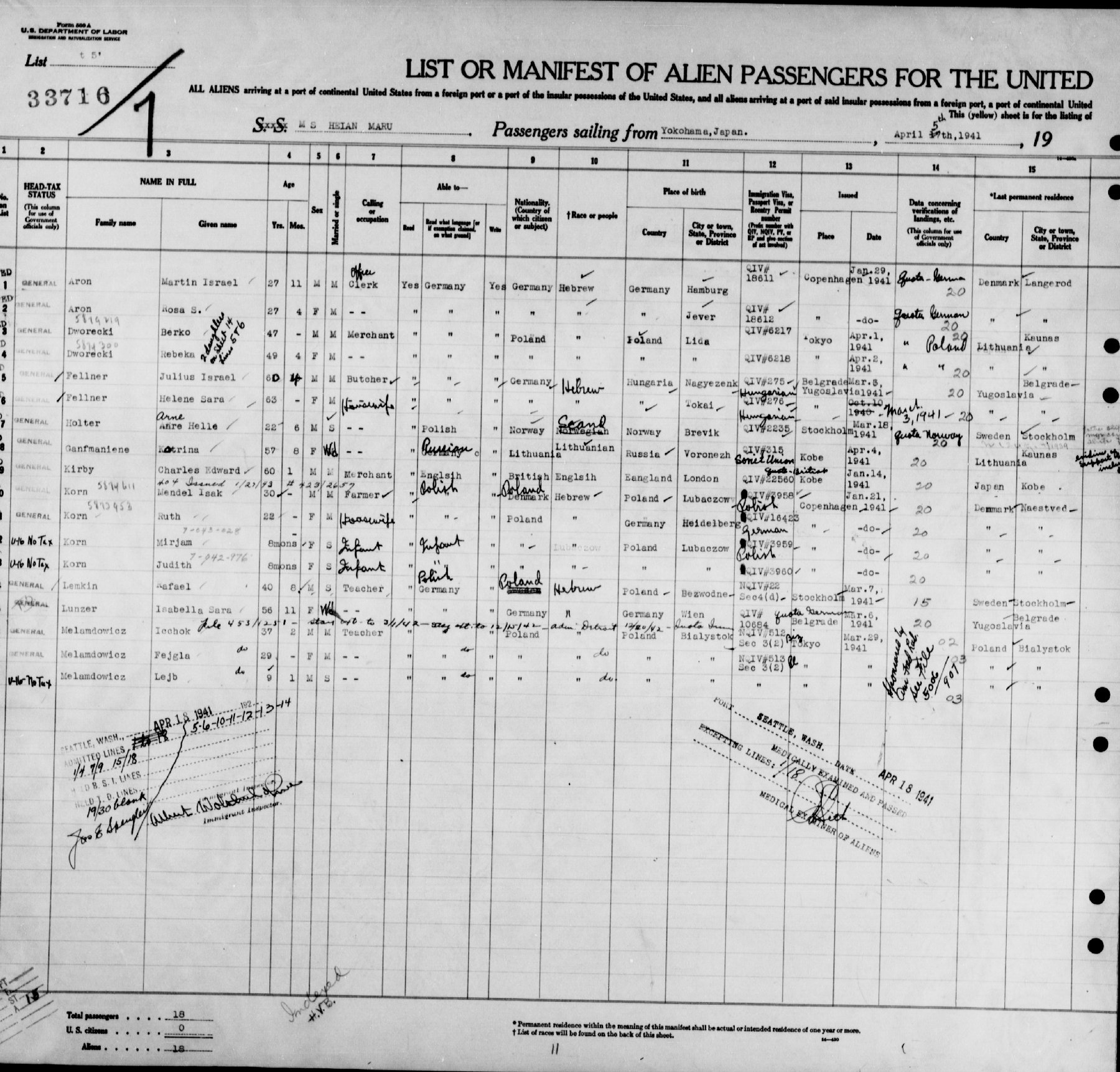
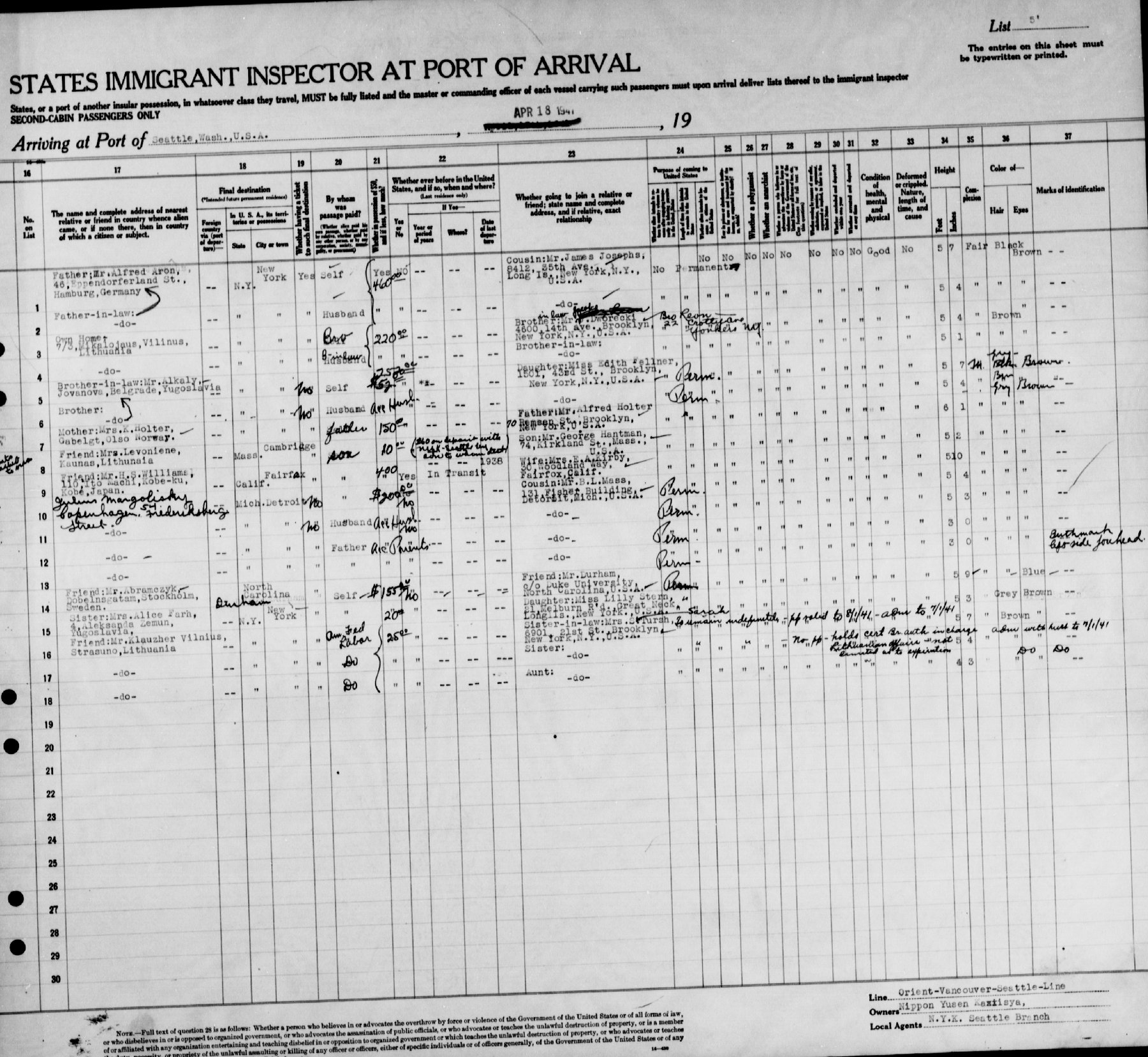
Click a document to see it larger.
What the register records
- Nationality as recorded
- Polnisch
- Age in 1940
- 29
- Family, per the Kitade-Bluman list
- wife of #1768
The journey
Reached Japan; aided by the Polish ambassador Tadeusz Romer; registered in Kobe for USA.
What is known
This is a reproduction of the Japanese transit visa documents belonging to Leo Melamed (born Lejb Melamdowicz, 1932) and his mother Fejgla Melamdowicz (born 1902 in Bialystok, a teacher). The Polish certificate (Zaswiadczenie/Certificat No. M-409) was issued at the Polish Legation in Kaunas on 5 December 1939. A Sugihara-era Japanese transit visa dated 21 August 1940 permitted the journey through Japan to Surinam, Curacao and other Netherlands colonies, and an American immigration visa No. 513 dated 29 March 1941 was later issued in Tokyo. The family escaped Nazi-occupied Europe and Leo Melamed later became a prominent figure in the United States.
Seen for the journey through Japan (to Surinam, Curacao and other Netherlands' colonies) 1940 VIII. 21. Immigration Visa No. 513 dated MAR 29 1941 Issued to Fejgla Melamdowicz accompanied by Lejb, son MELAMDOWICZ FEJGLA Rok urodzenia 1902 Miejsce urodzenia Bialystok Data 5 grudnia 1939 Japanese transit visa of Mr. Leo Melamed and his parents
Where this comes from
- The JEWCOM register — the refugee register kept by the Refugee Committee of the Jewish Community of Kobe (Ashkenazim) at No. 6 Yamamoto-dori, 1-chome, whose cable address was 'JEWCOM Kobe'. Eighty-four pages on the committee's own printe…
Entry 456 of the Kobe Jewish Community's refugee register: aged 39, born at Bialystok, who travelled from Vilnius. - United States Holocaust Memorial Museum, Holocaust Survivors and Victims Database — the Flight and Rescue electronic dataset (source 20725): USHMM's own transcription of the Kaunas register, 2,140 persons with citizenship, visa type, iss…
USHMM Flight and Rescue dataset: arrived in Japan 2 Feb 1941 (line 1758) - USHMM pa1110057: Wooden crayon case given to Lejb Melamdowicz (now Leo Melamed) while studying at a Japanese school.
The United States Holocaust Memorial Museum's biography of Leo Melamed — born Lejb Melamdowicz at Białystok on 20 March 1932, son of Icchok and Fejga — states the family's transit visa numbers outright: 1758 and 1768, issued on 14 August 1940. Those are these two lines of the register, and both carry that date. The register enters them as husband and wife and its companion notes record a child, Leib (Leo), aged eight. This is an identification made on a number rather than on a name. The archive would ordinarily go no further than a spelling — the register writes Melamedowicz on one line and Melamdowicz on the other — but a family that states its own visa numbers, and a register that agrees on both numbers and the date, is a different order of evidence. - "Washington, King, Seattle, Passenger Lists, 1890-1957", FamilySearch — index entry for Fejgla Melamdowicz, 1941: born about 1912, Poland. Digitised from NARA microfilm publication M1383 (passenger and crew lists of vessels arriving at S…
FamilySearch's index of the Seattle passenger lists, read by the archive on 20 September 2026, has Fejgla Melamdowicz, born about 1912 in Poland, arriving at Seattle in 1941. The register's compiled line gives 1911, and the two are 1 year apart. The name occurs once on the register, and a Polish-born passenger landing at Seattle in 1941 fits the route through Japan, so the entry is taken as this person's under the archive's rule of 19 September 2026 for records from the route. - JDC Archives, New York, collection AR 33/44 file 53 (the Jewish Community of Kobe's returns to the JDC, 1941; Set I, item 00761) — Set I pp. 24–32 — April 1941 (and a May continuation sheet)
She left Yokohama on the Asama Maru on 26 April 1941, bound for the USA (the Jewish Community of Kobe's list of refugees who left Japan in April 1941 (JDC Archives, AR 33/44 file 53)). The list reads: "″ Fajga". (Asama Maru, Yokohama, 26 April 1941, the USA.) - Manifest of alien passengers, SS Heian Maru, sailing from Yokohama April 1941 (day not legible), arrived Seattle April 1941 (stamp read as 18 Apr 1941, uncertain) (US National Archives, M1383, roll 260; read on FamilySearch's copy)
The National Archives' passenger list of the Heian Maru (FamilySearch's copy) records Fejgla Melamdowicz, 29, of Białystok, sailing from Yokohama in April 1941 with her husband Icchok, a teacher, and their young son, their passage paid by the American Federation of Labor, bound for her sister, Mrs. S. Tursh, in Brooklyn. - The certificate of identity of Fejgla Melamdowicz (No. 1758), issued by the Polish Legation in Kaunas, with two photographs and 'Cancelled' stamps, shown in an exhibition case with a bilingual caption.
- The Heian Maru, arriving at Seattle in 1941: list or manifest of alien passengers, the sheet that names Berko Dworecki — US National Archives, Record Group 85 (Immigration and Naturalization Service), Passenger and Crew Lists of Vessels…
- The Heian Maru, arriving at Seattle in 1941: the continuation sheet, with the relatives named and the destinations, for the sheet that names Berko Dworecki — US National Archives, Record Group 85 (Immigration and Naturalization Service),…