What the register gives us — and what it does not
Everything starts from Sugihara's own ledger: 2,140 lines, one for every visa
issued, each line with a name, a nationality, a visa type, a date and a fee.
That is all. There are no birth years and no birthplaces. Today 86
of those lines have a birth year attached, and only because a surviving document supplied
it.
Why 2,140, when the ledger's numbers only run to 2,139? Because the numbering
and the visas are not the same thing. George Bluman and Akira Kitade established the true count
in their study of the list, and this archive has now verified the mechanics line by line against
the Foreign Ministry scan: the clerk skipped number 1395 (the jump falls in the
middle of the Frliczka family), and squeezed in two supplementary entries —
1160a, Berkowicz Chaim, and 1915a, Wojlang Sara — marked with an “a” in the ledger
itself. 2,138 numbered lines plus two supplementary ones: 2,140 issued visas.
The searchable register below holds all 2,140, including the two “a” lines, credited to that
research. (The Bluman–Kitade file records the same 2,140 people; an earlier edition carried
Kuszynski Bazyli, our No. 1669, as a second No. 99 — a clerical slip, as Prof. Bluman
confirmed in August 2026; the scan shows him at 1669.) And beyond the ledger altogether, perhaps a
thousand more visas — the hotel-issued, the final-days, the never-entered — were written and
never recorded at all.
The clerk was also inconsistent about name order: most lines run surname first
(“Trunk Chil”), but many run given-name first (“Ludwig Berliner”), and some —
“Licht Abram” — could be read either way. The register preserves each line exactly as
typed; the Bluman–Kitade reading, which resolves surname and given name for every entry,
rides alongside as a searchable alias, so a search in either order finds the person.
The typescript itself is damaged in a specific way: on 934 lines the leading letter of
a name is missing, so Swislocki reads as wislocki and Rozenbaum as
ozenbaum. 1,150 lines carry a repaired reading. A repair is a judgement, and it is
recorded as one — the original text is never overwritten, and every repair is listed in the
corrections log.
What counts as evidence
In roughly this order of weight:
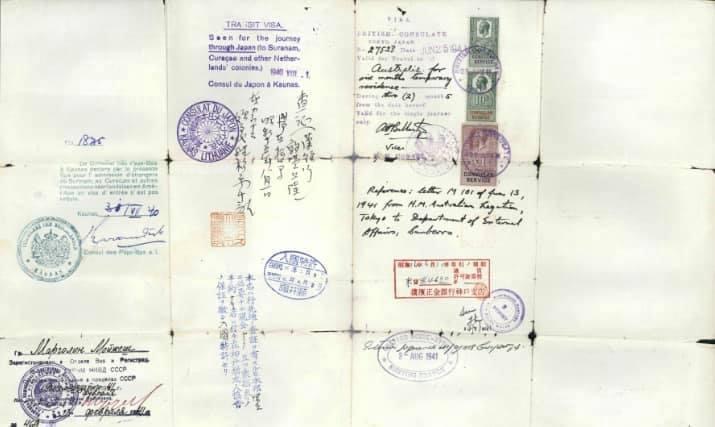
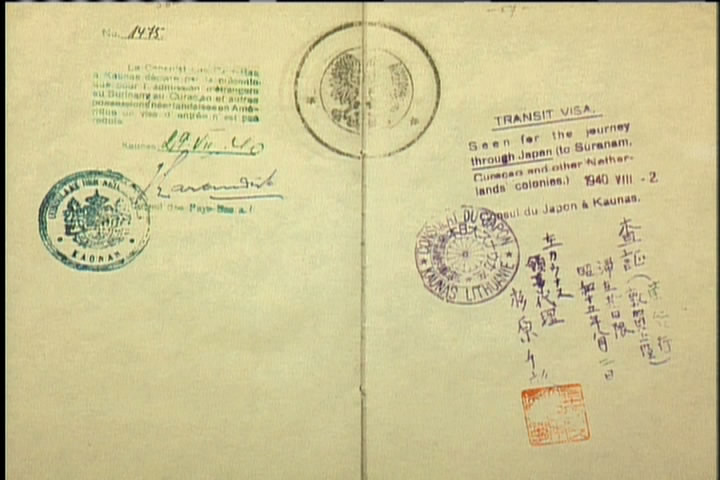
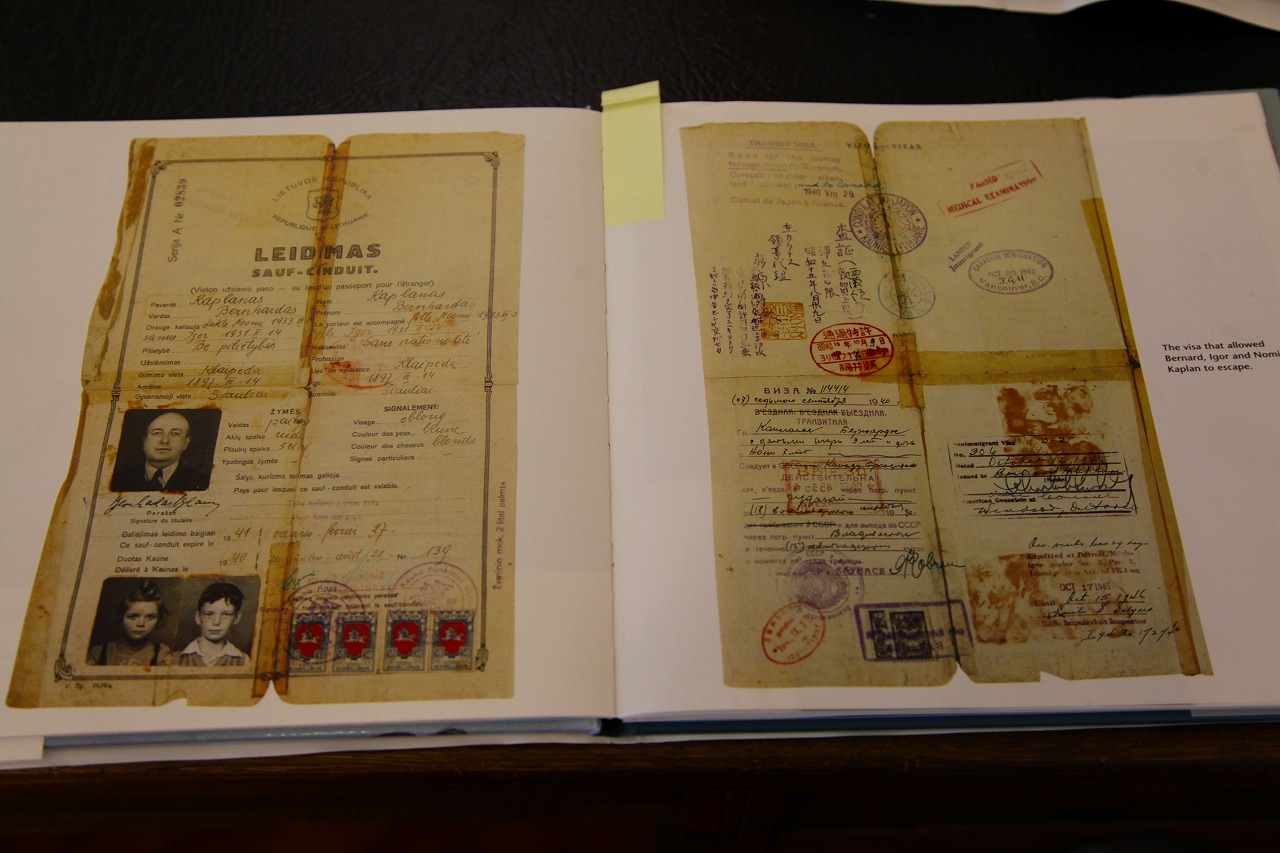
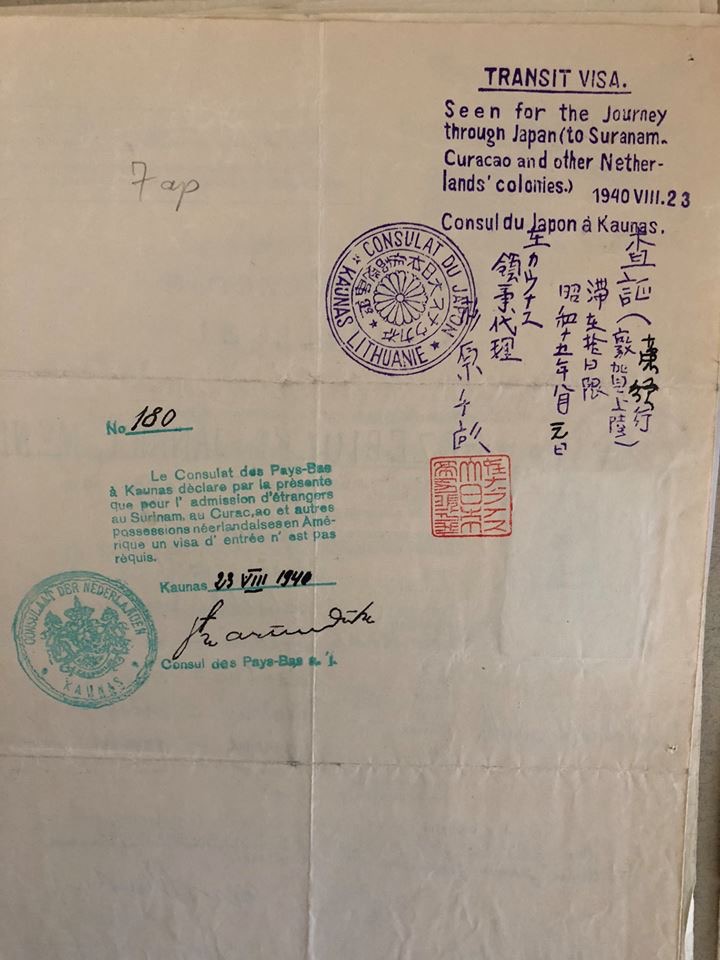
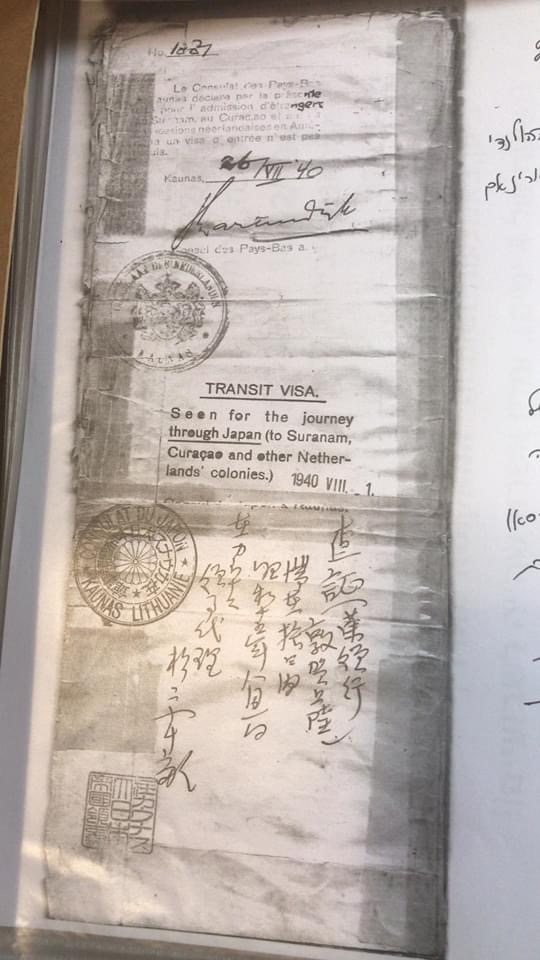
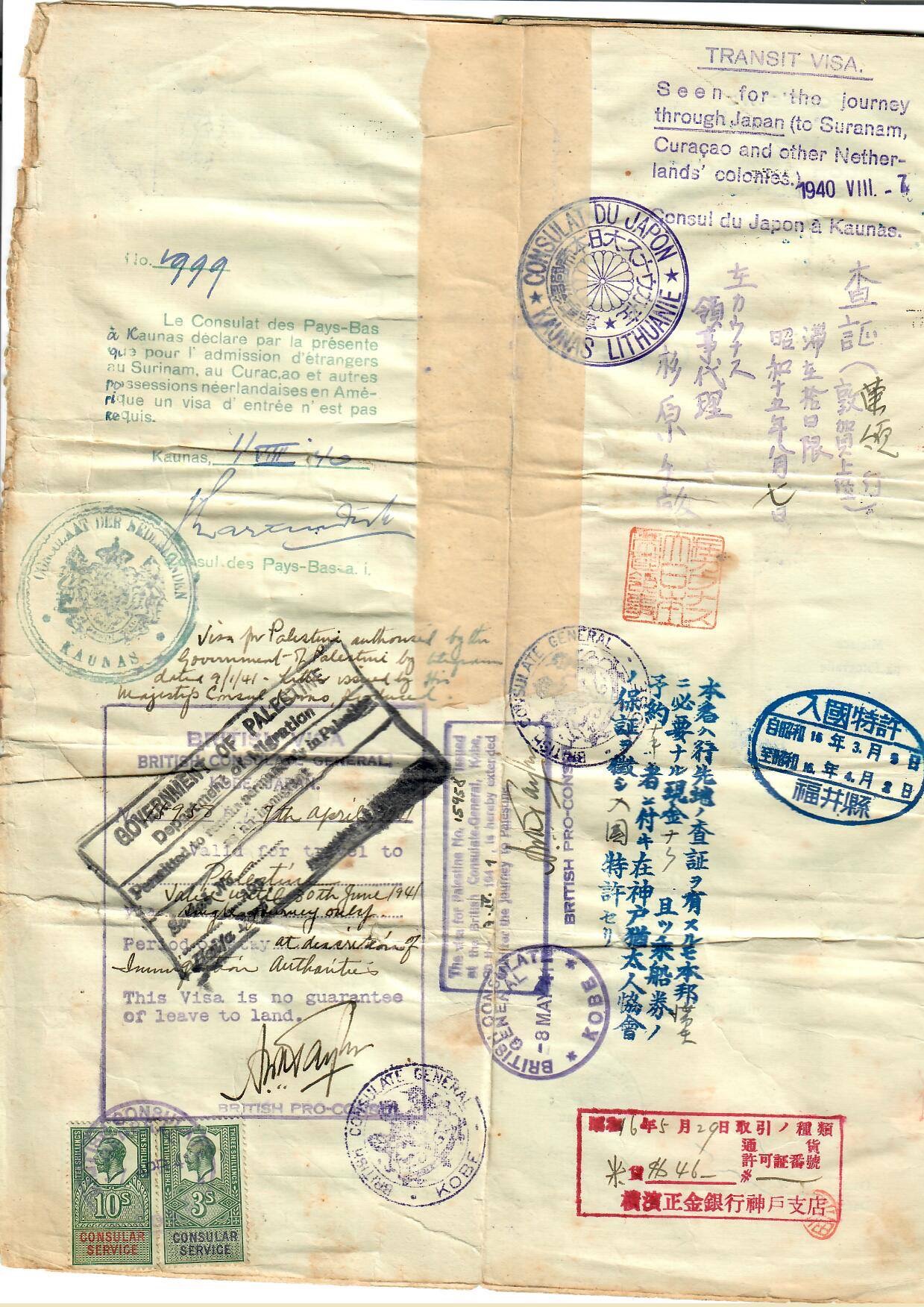
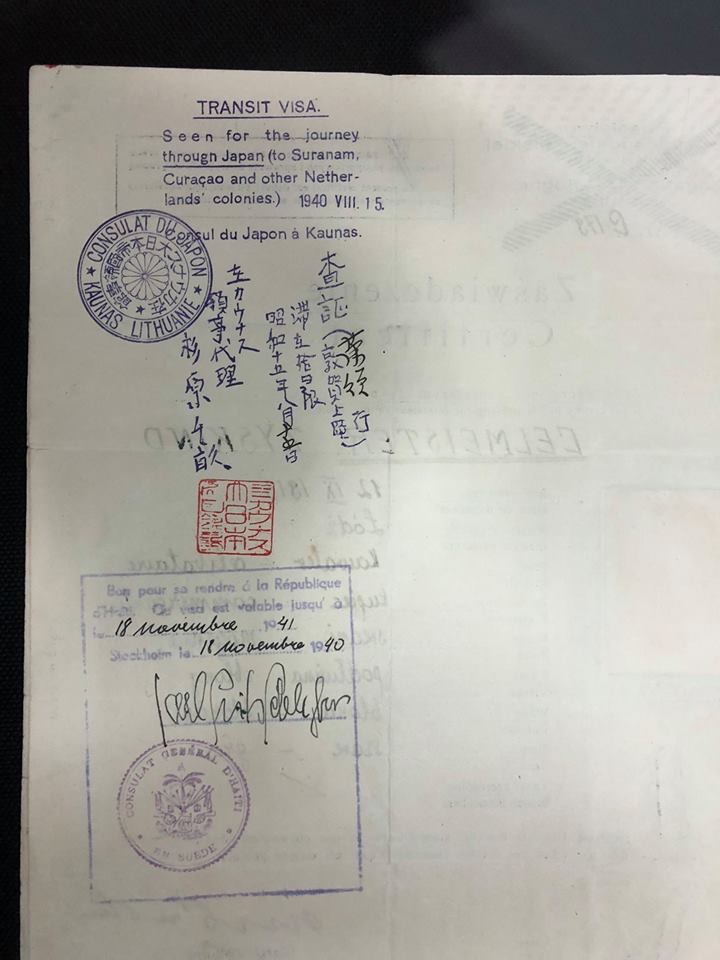
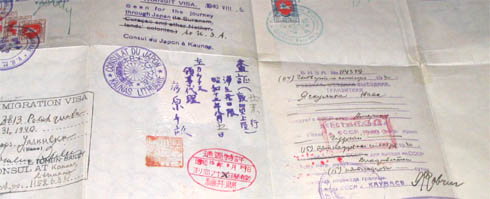
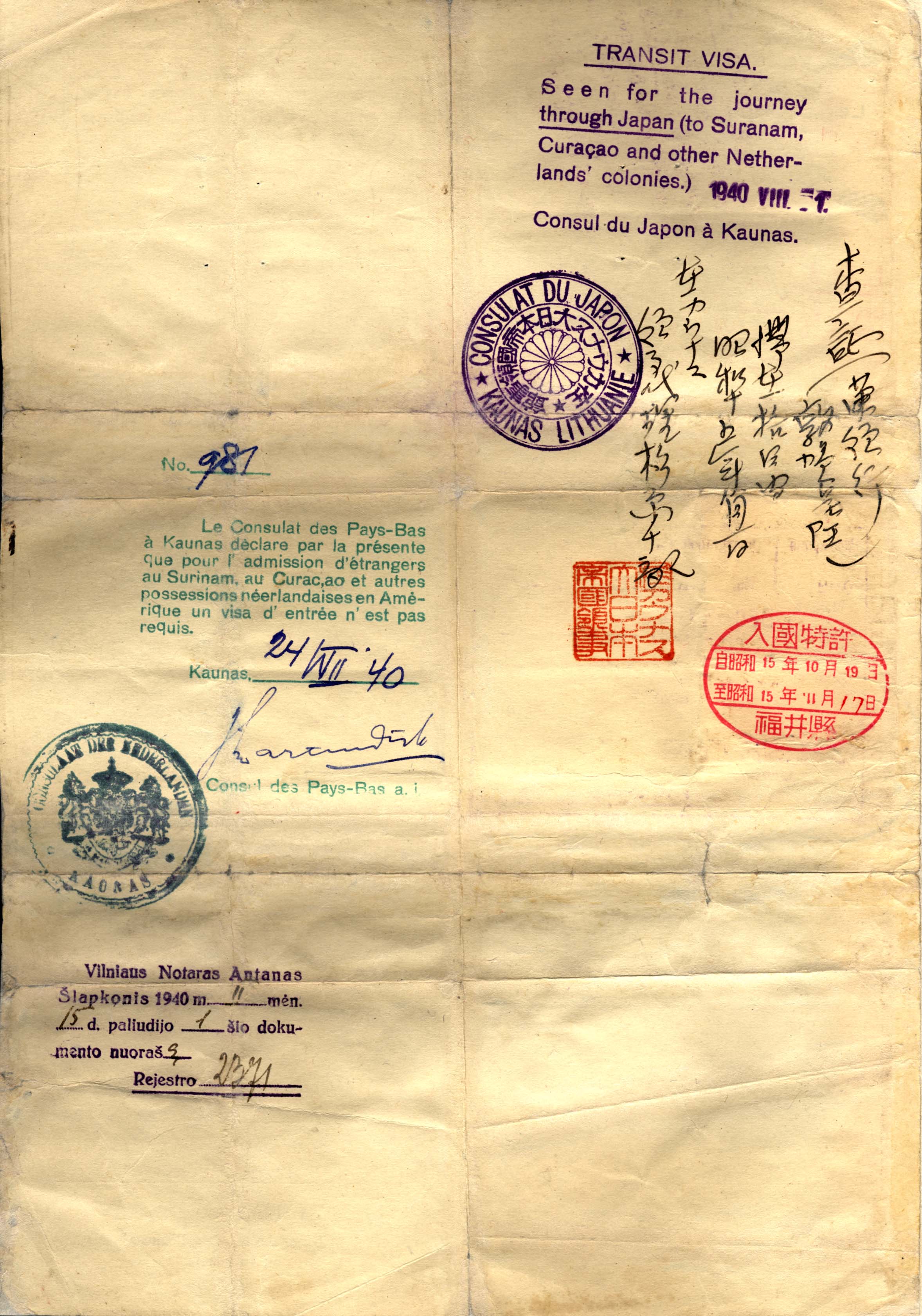
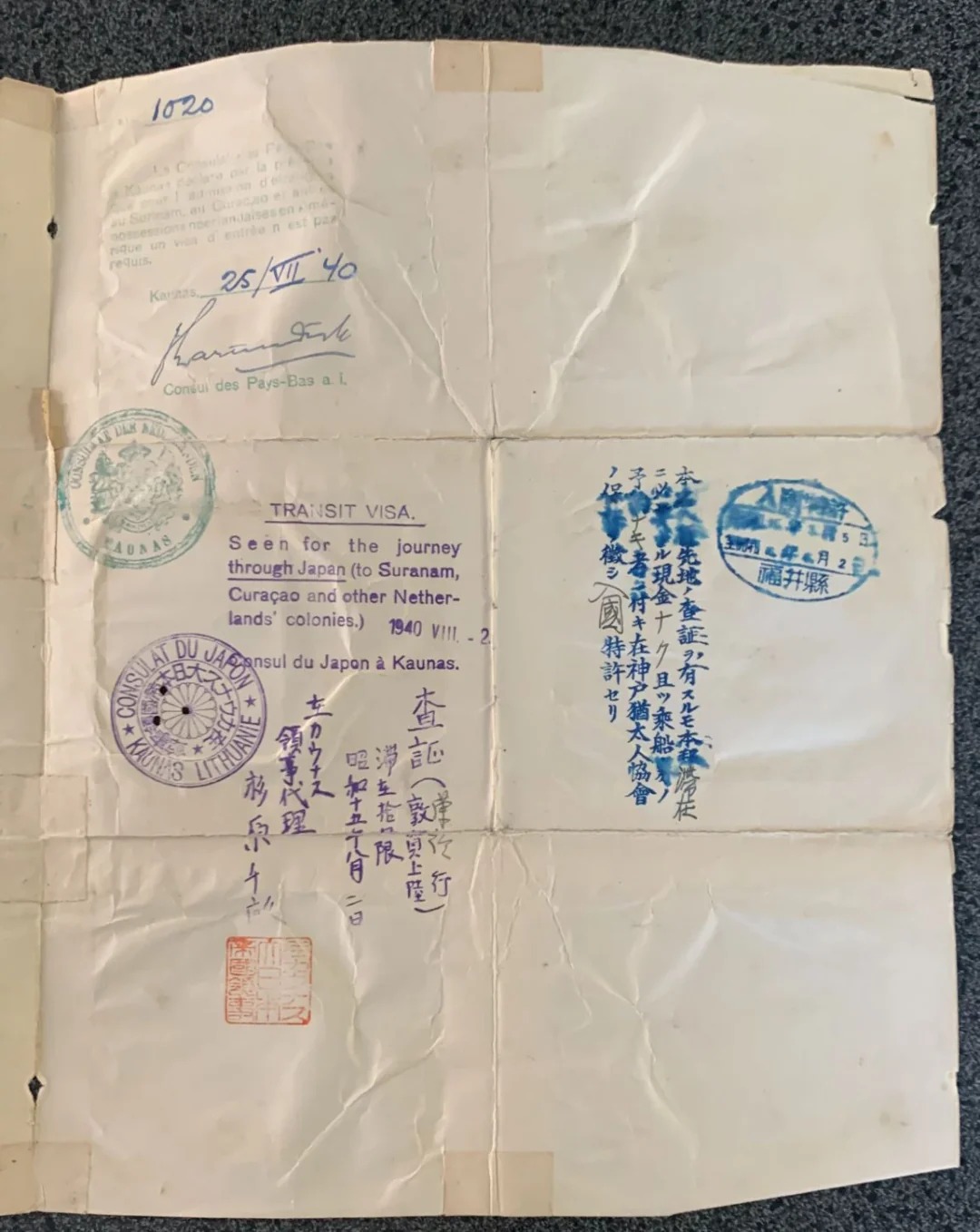
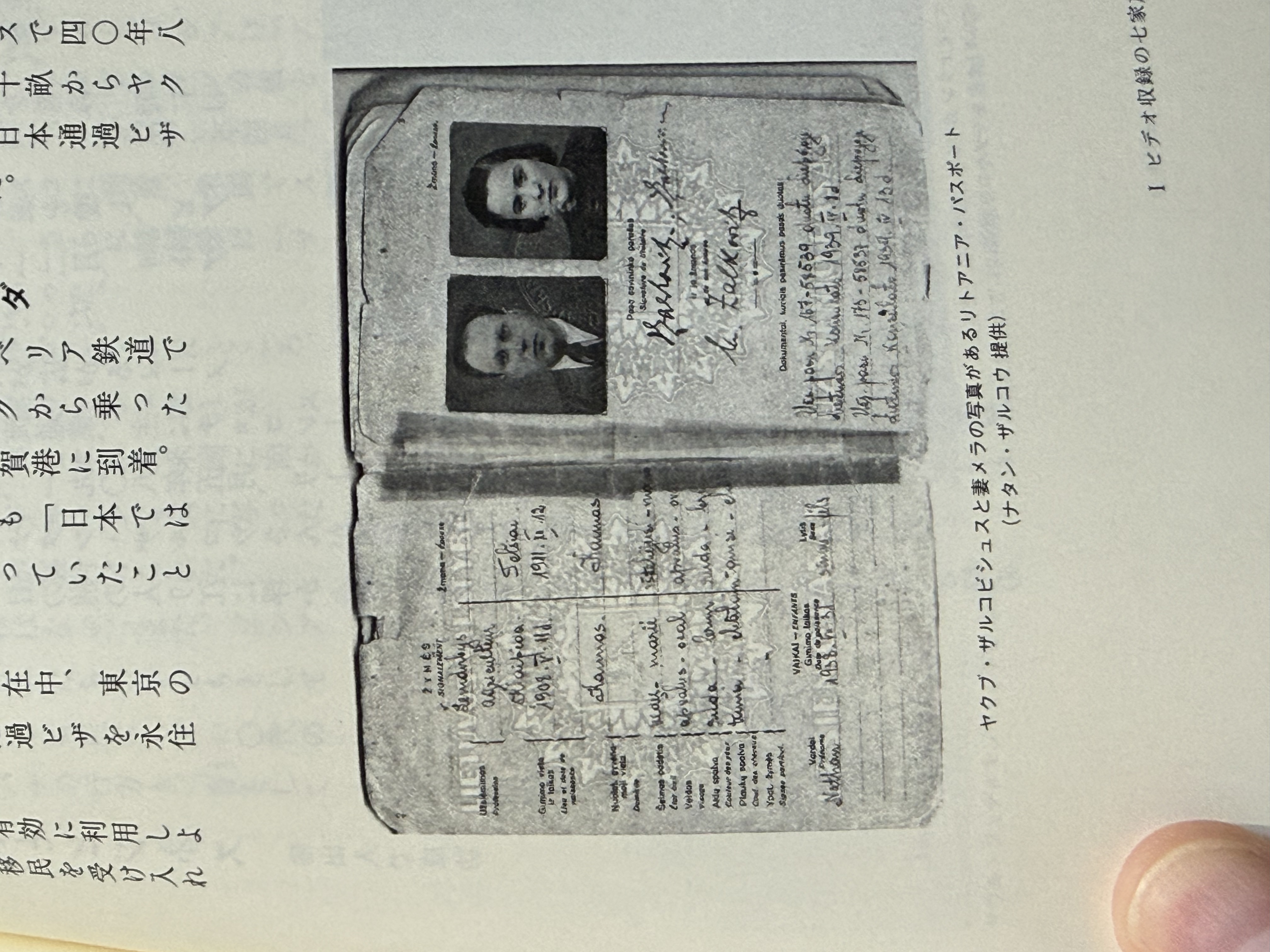
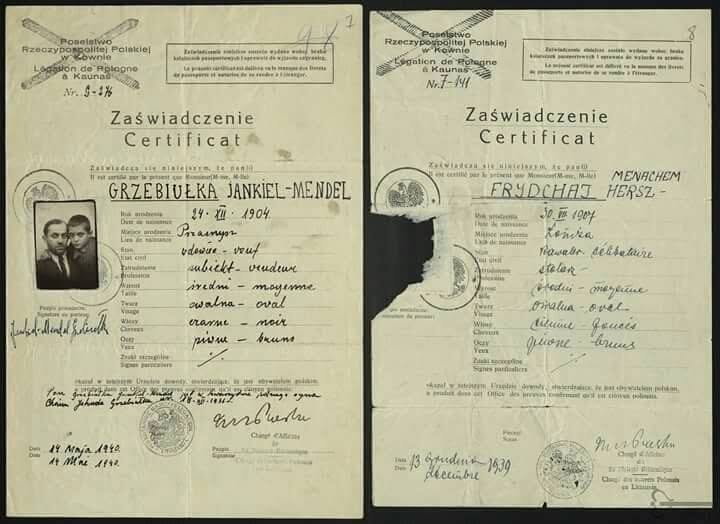
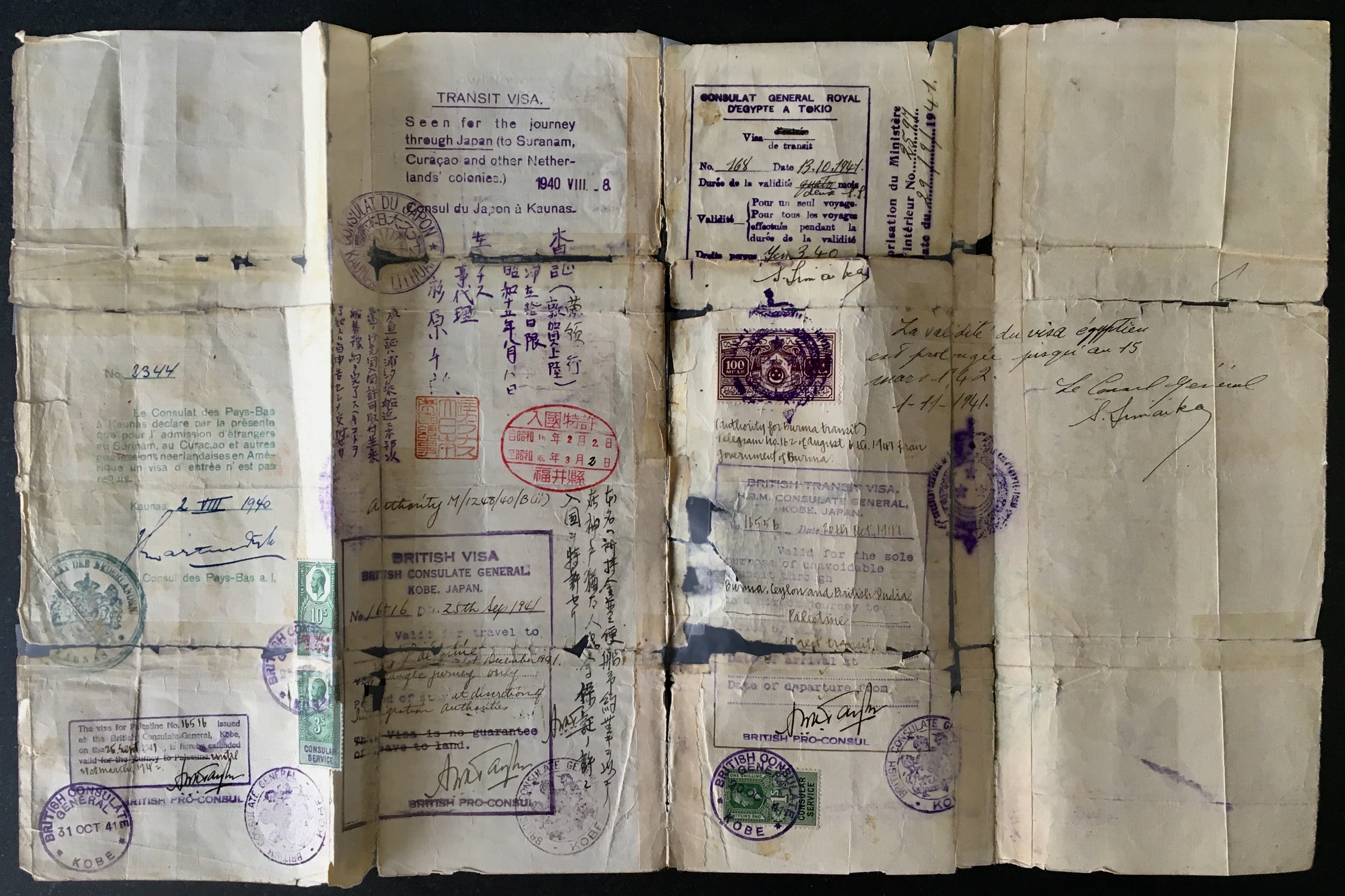
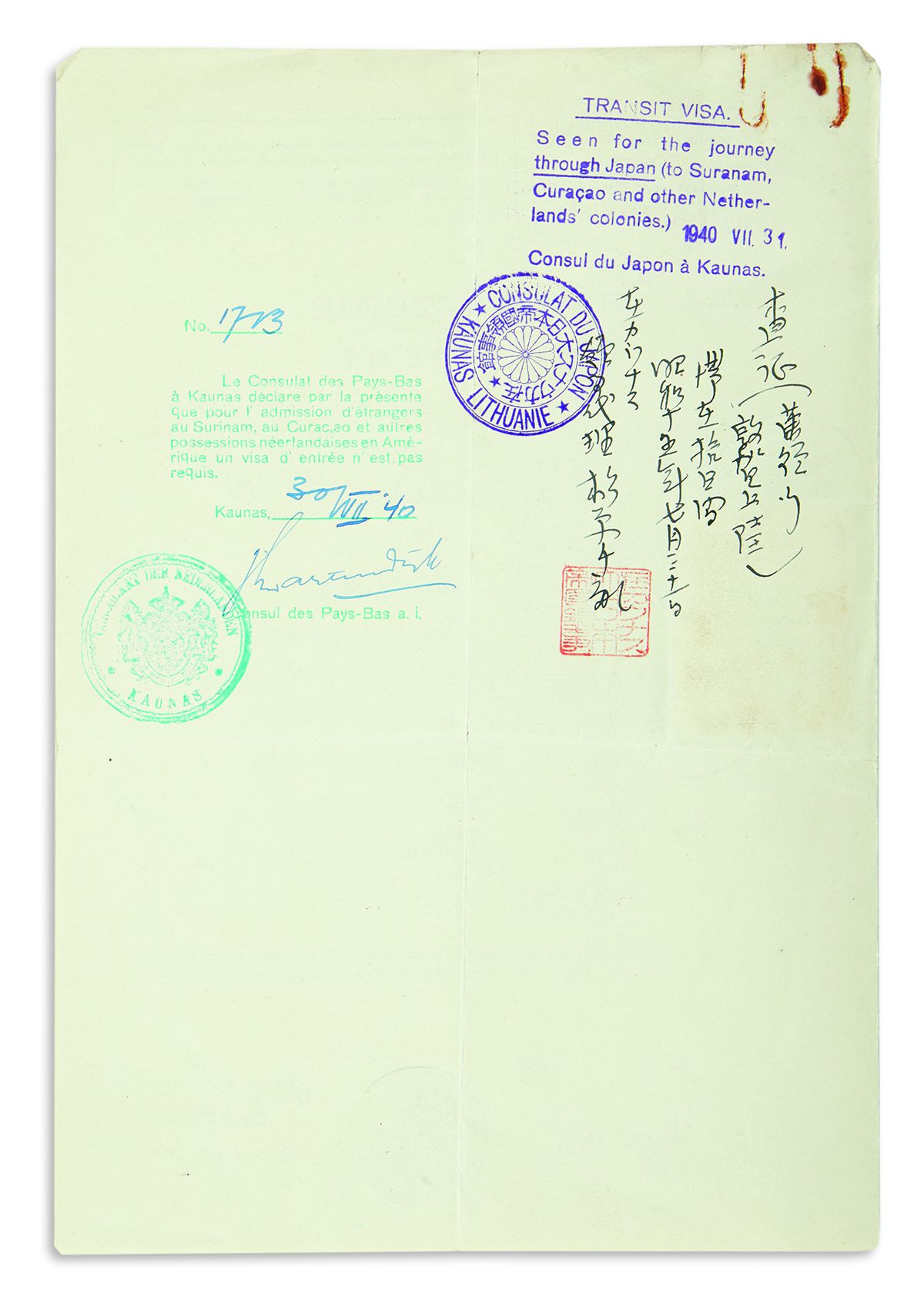
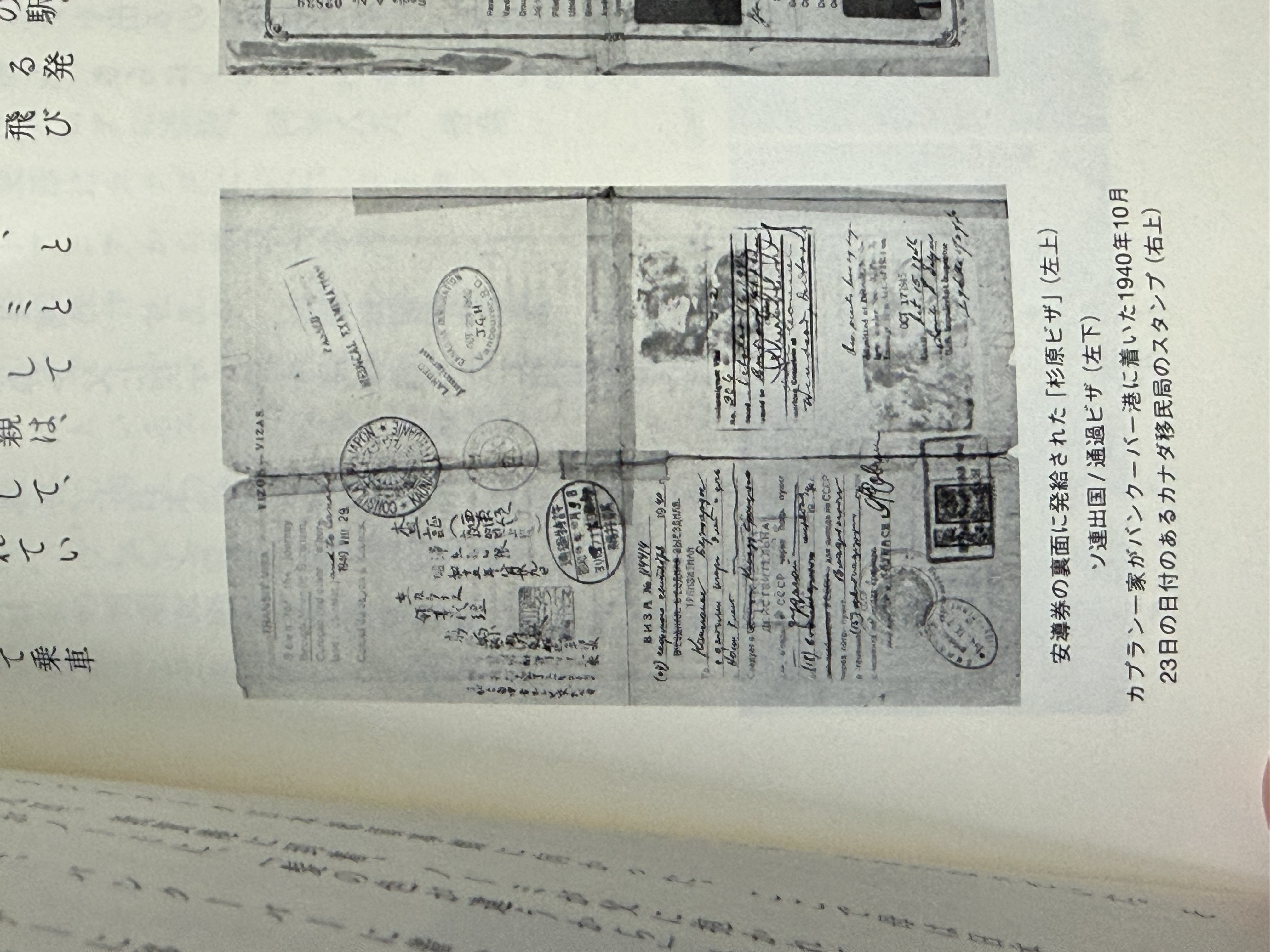
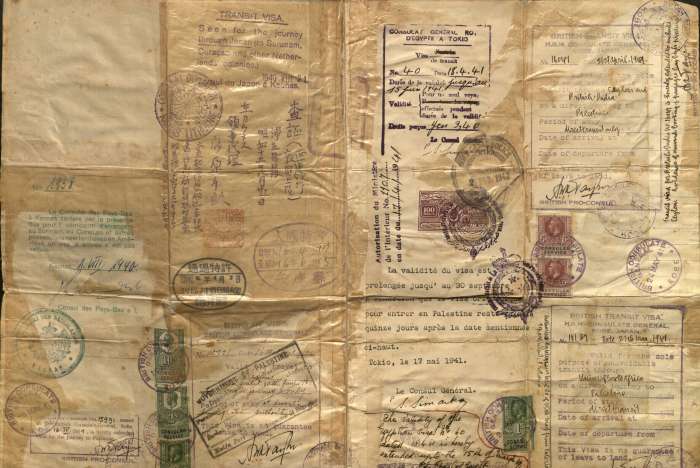
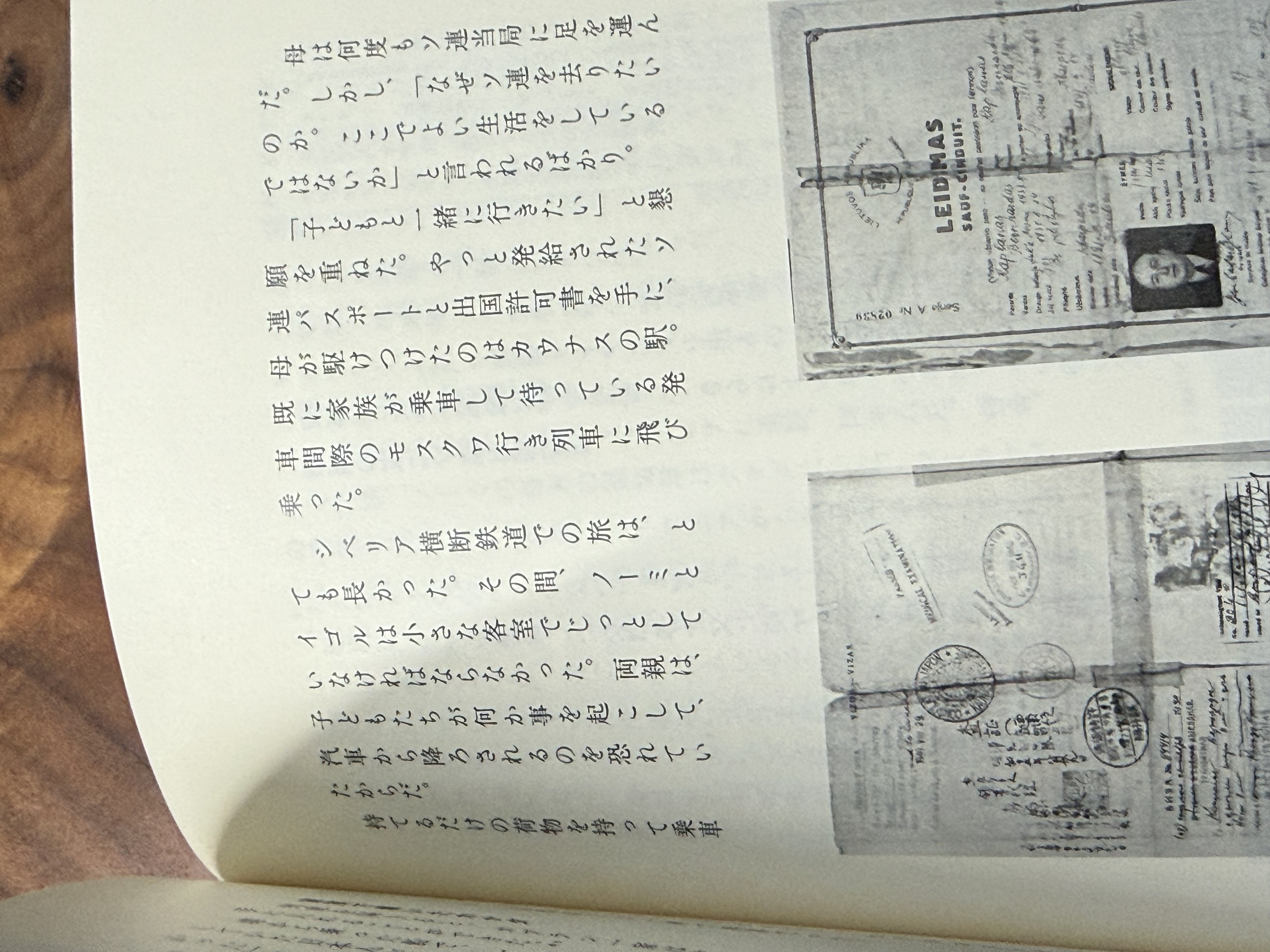
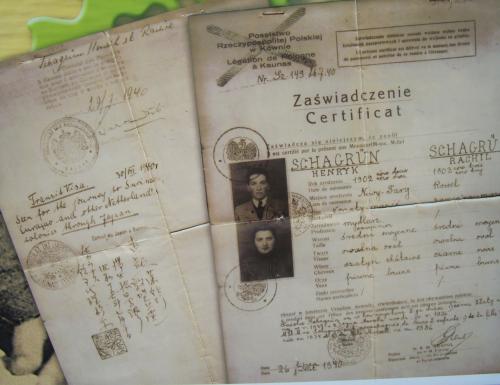
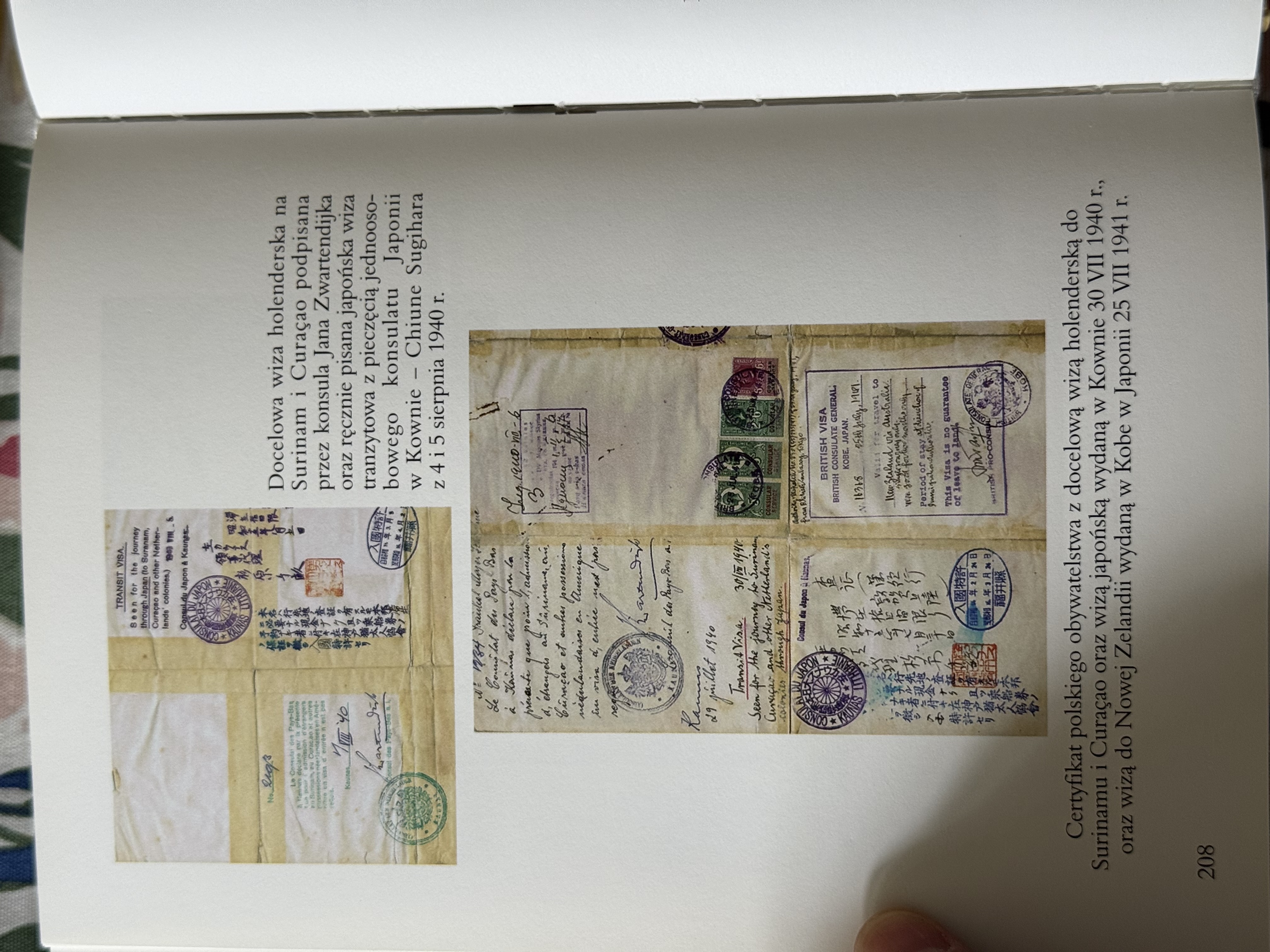
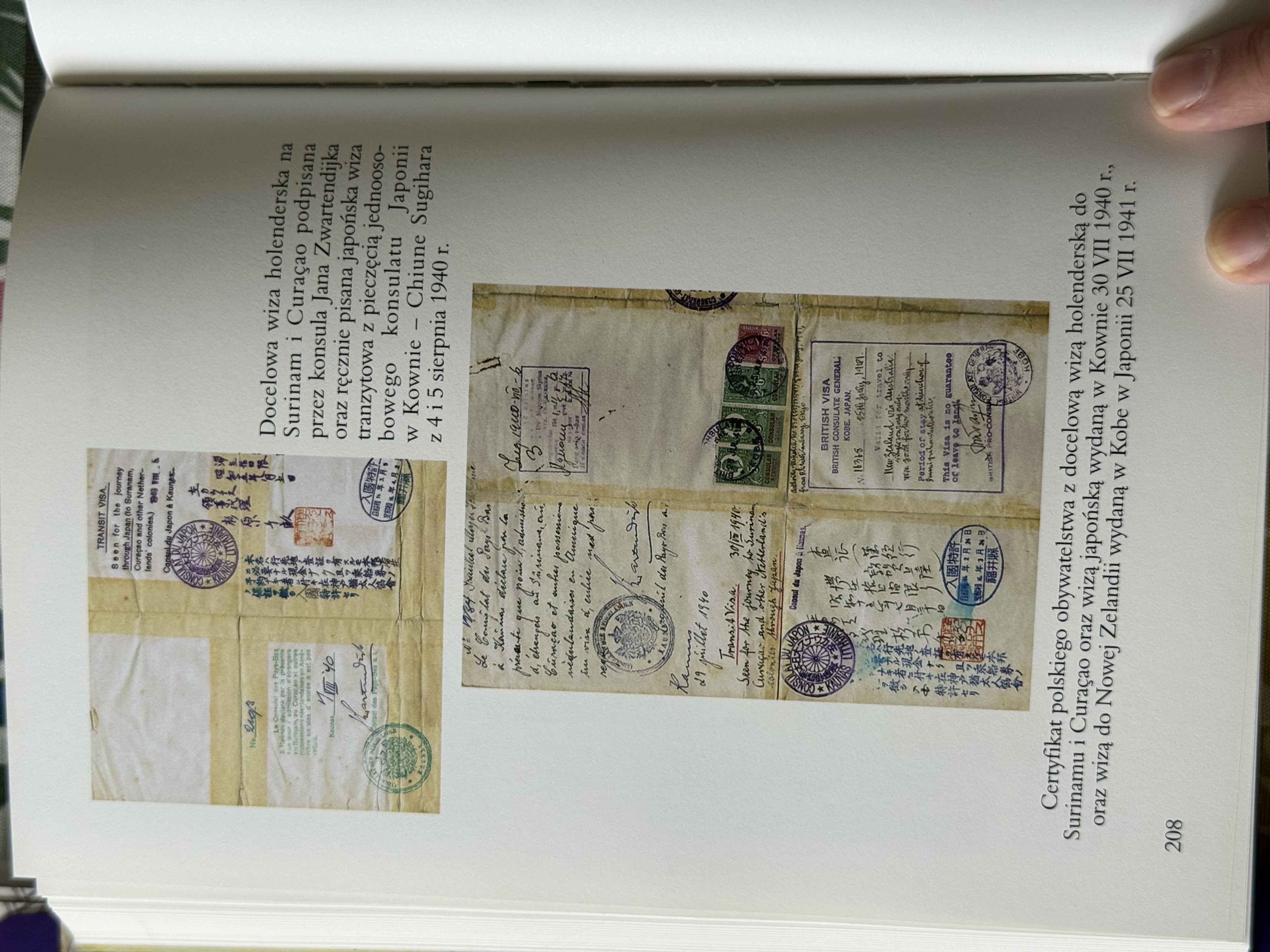
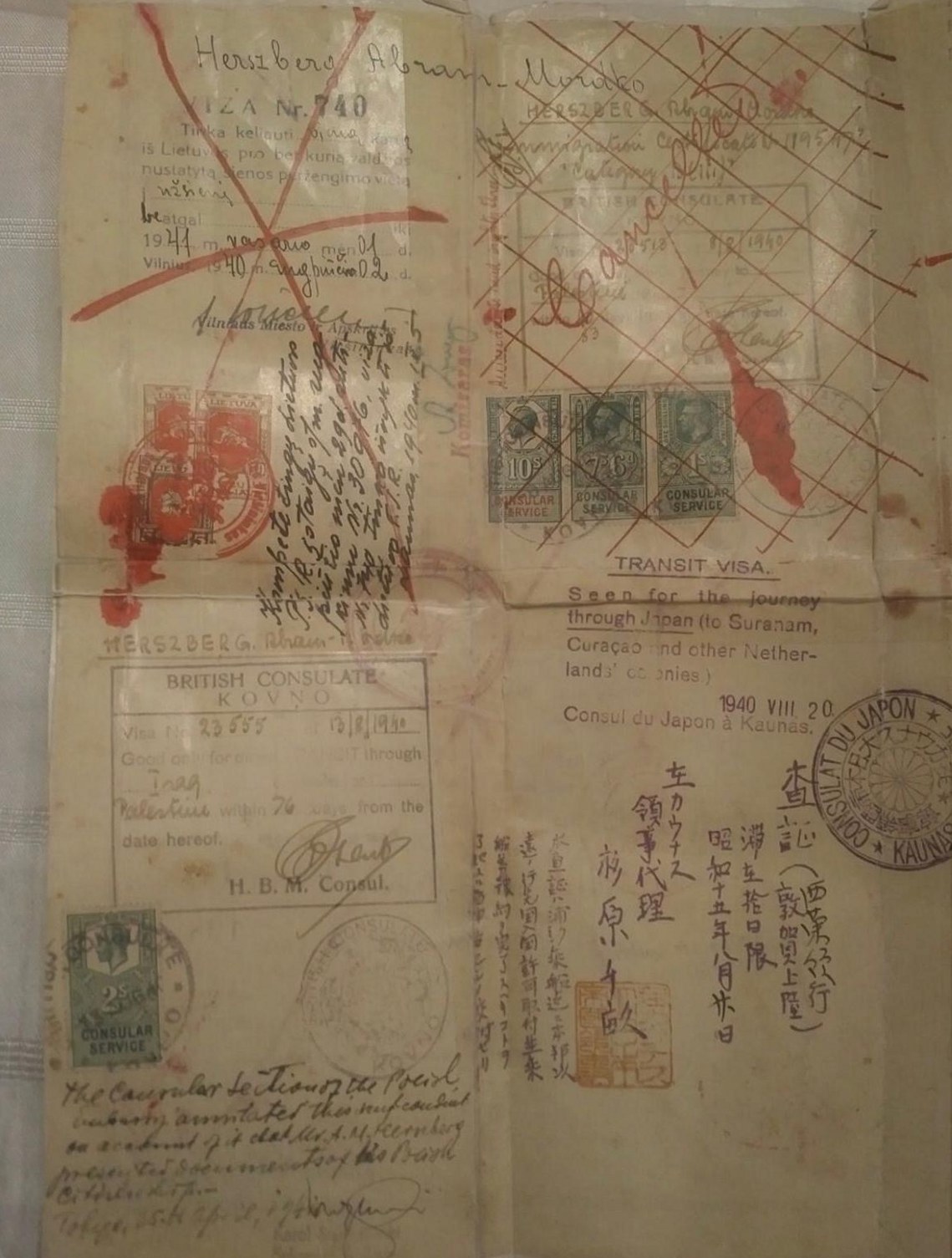
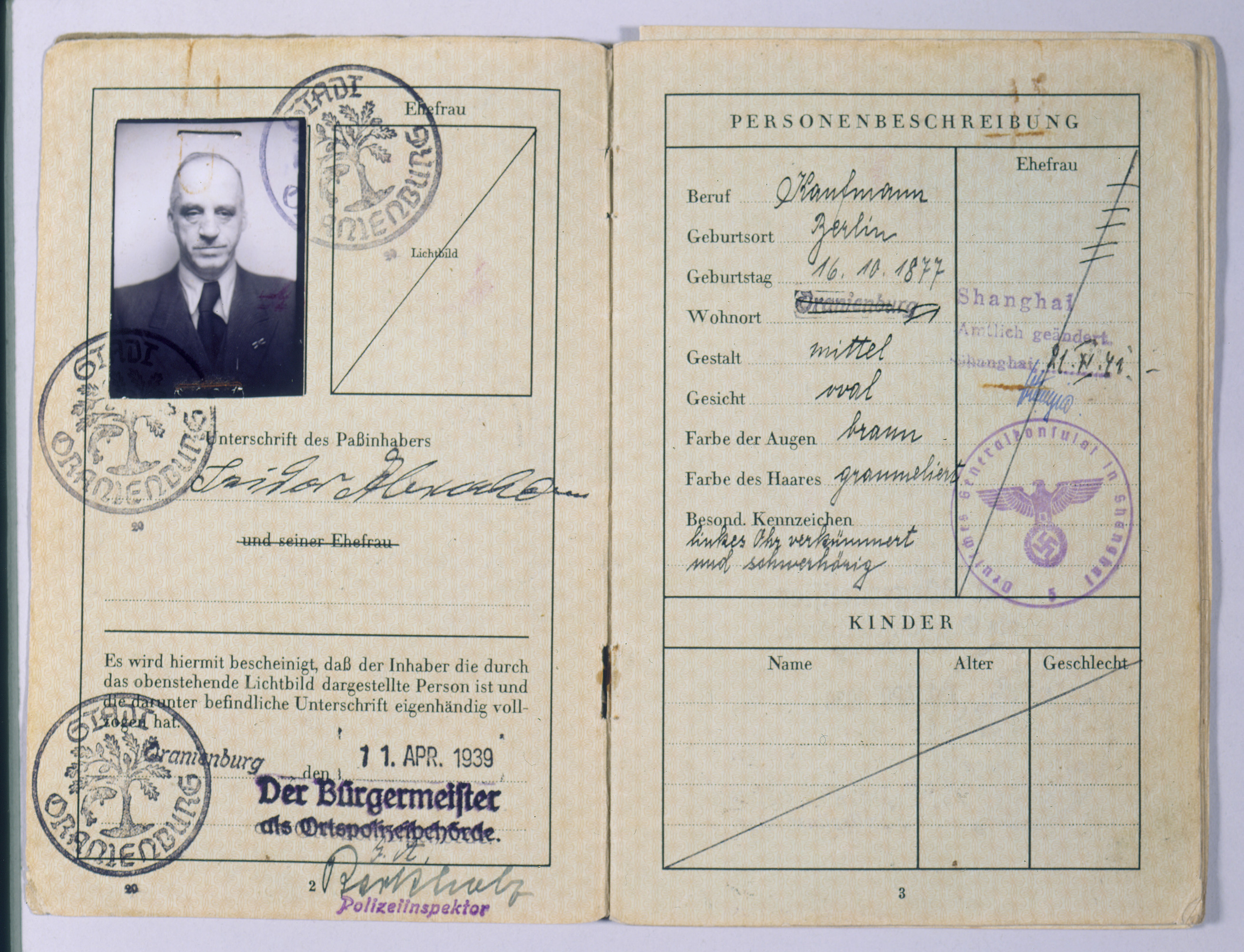
- The document itself. A visa, a Curaçao endorsement, a Polish citizenship
certificate, a passport page — bearing a number, a date, or a hand we can compare with others.
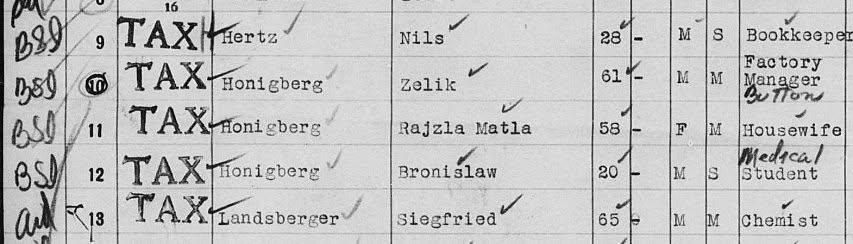
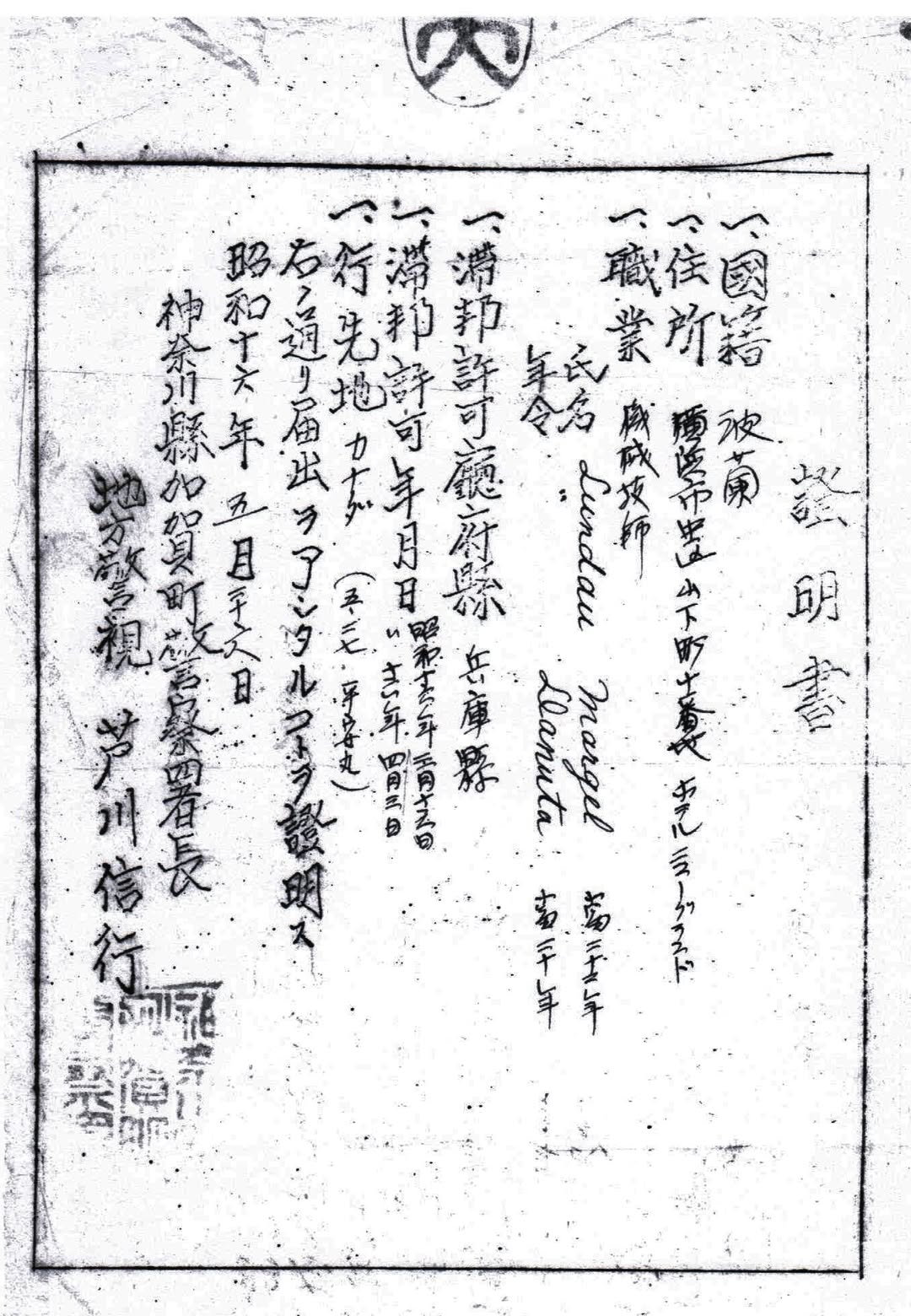
- A roster that names the same person. The Kobe and Shanghai refugee lists,
JDC and yeshiva rolls, Japanese landing records. These were written by different people for
different purposes, which is what makes agreement between them meaningful.
- Family testimony. Indispensable, and treated as evidence rather than
decoration — but a family's account of a name is not independent confirmation of that
name, since both may descend from the same memory.
- Published scholarship, cited to its source, including where it disagrees
with us.
Matching a document to a line
A name in 1940 Kaunas could be written in Polish, Lithuanian, German, Yiddish or Russian, by a
clerk hearing it for the first time, and then changed again after the war. So the archive
compares names allowing for the ordinary drift between them: sz / s / sch,
cz / c, rz / z, w / v, dropped leading letters, given names in either
order, and post-war anglicisation — Herszberg becoming Hershberg, Klejn becoming Klein.
A name that agrees is where a match starts, not where it ends. The question that
decides it is whether anything else agrees: the visa number, the date of issue, the
nationality, the family travelling on the same sheet, a birthplace, a photograph.
Why a matching name is not proof
The large archives hold millions of records. Searching one of them for a common name returns a
crowd: a single line of our register, searched against a European archive, returned ten men of
that exact name born between 1866 and 1931. Any of them might be the right one. Nothing on our
side can say which — and a coin-flip published as a fact is worse than an open question.
Where a name is genuinely rare, a match carries real weight. Where it is common, the archive
records the record as a lead and says so on the page, rather than quietly
turning a possibility into an identification.
The crossing, and what it proves
Almost everyone on this list crossed the Pacific. They left Lithuania by rail through Siberia,
sailed from Japan, and landed at Seattle, San Francisco or Vancouver — and the officials who
met them wrote down what the consular clerk in Kaunas had not: a year of birth, a birthplace,
a ship, a date.
That gives the archive something it badly needed. The register records an age and no birth
date, so a name alone can never settle an identification. An arrival record made years later
and an age written in Kaunas in 1940 are two independent hands; when they agree, they agree
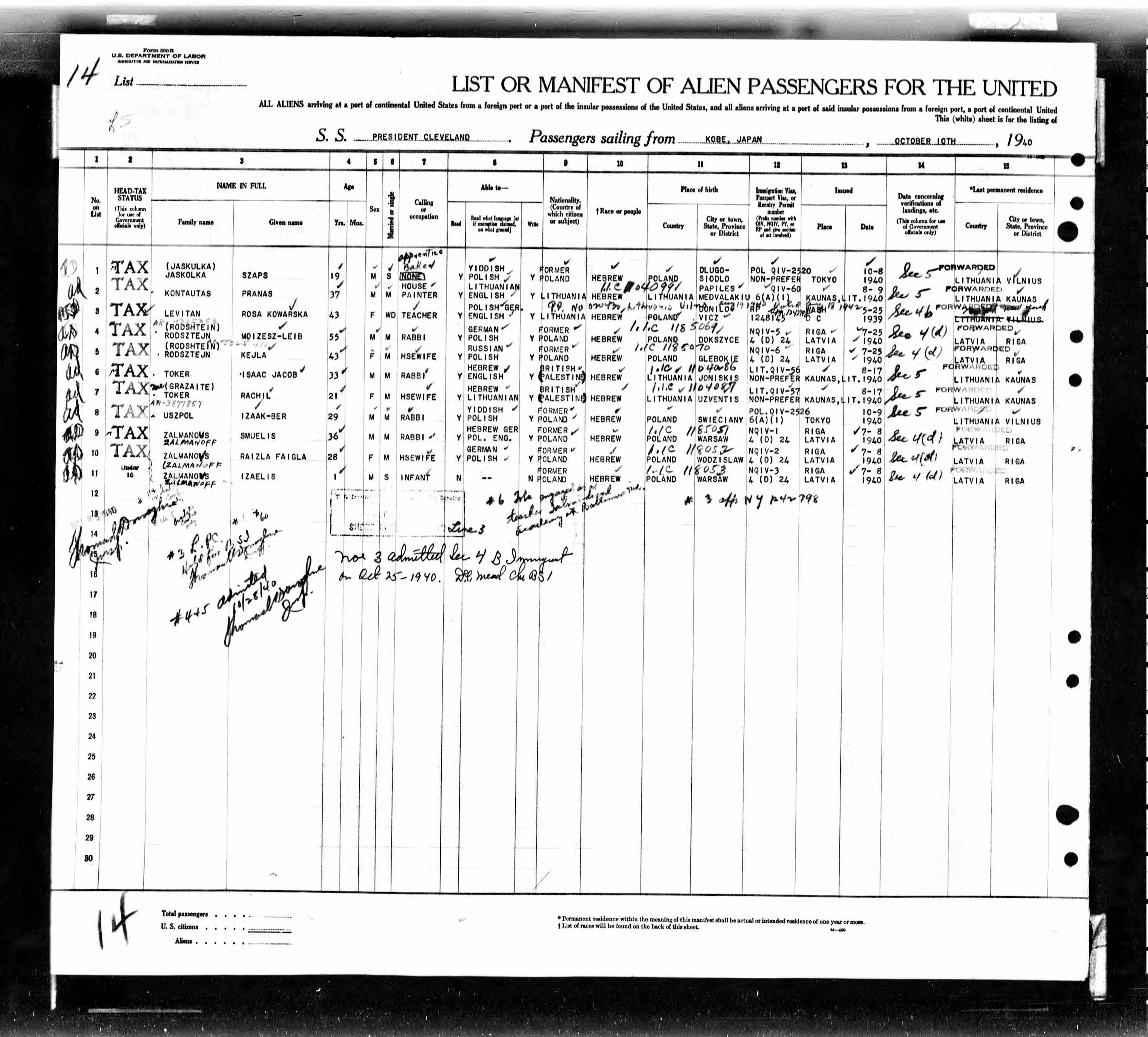
about a person. 109 lines of the register have been matched this way, across
sailings of the Heian Maru, Hikawa Maru, Hie Maru,
Asama Maru and the President Cleveland.
One family shows what the agreement is worth. The register gives entry
No. 1410 a wife and three children with their ages and nothing else. All six of them
appear on a single sailing into San Francisco in 1946, and every age the clerk wrote in
August 1940 matches a birth year an American official recorded six years later. Travelling
with them is a sixth child, born in 1946 — absent from the ledger not because it missed him
but because he did not yet exist when it was written.
The same records show the reverse, too. Documents survive for people who took this route, on
these ships, in these months, and who appear nowhere in the consular list under any spelling.
The ledger is not the whole of who escaped this way.
People the register never listed
The consular clerk recorded whoever held the visa. A wife or a child travelling on it was
often written as an aside — “wife Bertha (29)” — with a name, an age, and no line of
their own. They cannot be counted, cannot be searched for, and cannot be found by a descendant
looking up a family name.
The archive now records them: 369 people so far, of whom
196 are children. Their median age is 10; 44 were under five.
They are recorded exactly as the ledger has them and no further. “Bertha, wife, aged
29” — no surname, because the note gives none, and guessing one from the entry produces
errors: the register writes name order both ways round, and families share a surname across
neighbouring lines. Where the note gives an age and no name at all, nobody is recorded. She
travelled, and we cannot name her; saying so is honest, and inventing a name for her is not.
The four states a record can be in
- Documented and matched — a surviving document tied to a register line.
375 lines are here.
- Documented but unmatched — a real document whose owner we cannot yet place
on the register. 49 of these. They are published as their own records, because a
document nobody can name is still evidence.
- A name and nothing more — the majority. Most of the 2,140 are still
only a line of typing.
- An unconfirmed lead — an outside record under the same name that nothing
yet ties to this person. Shown, labelled, and never counted as corroboration.
How this archive states a death
Almost everyone written into Sugihara’s register was born between about 1895 and
1925. If they were living they would be over a hundred, so the bare fact that someone has died is
not a revelation and this archive does not treat it as one. What carries weight — and what a
family will feel — is the manner and place: murdered at Ponary, deported from the
Kovno ghetto, died in a camp on Flores.
So a death is stated here when a named source establishes it for this person:
the family, a document, or a researcher who says how they know. The source and the date are
published beside it, so that anyone who thinks it wrong can say so and can see what would have to
be argued with. Manner and place meet the same standard as any other claim on this site, and are
never inferred from a name matched in a database.
If a fate here is wrong, tell us. It will be corrected or removed, and no family is
asked to justify the request.
What this archive will not do
- Publish an identification that rests on a matching name alone.
- State what became of somebody on the strength of a name found in a names database. A hit
there is a lead to check, not a fate to announce — and that holds however well qualified
the person making the match, because a researcher can match on a name as easily as anyone. The
test is what is shown, not who is speaking.
- Alter an original photograph. Where a document was photographed at an angle and has been
squared up for reading, the corrected image is a generated copy and the original photograph
stays one click away, because the photograph is the evidence and the correction is our
reading of it.
- Publish a living person's material — a photograph, a family story, a message from a
community group — without their permission.
When we get it wrong
Identifications here have been withdrawn after they were published, and will be again. When
that happens the record says so rather than quietly reverting: a proposed match set aside is
left visible as a question, unlinked from the register line it was claiming. Every change the
archive has made — 5,902 recorded so far — is kept and published in the
corrections log, with the reasoning.
The standard the archive tries to hold is simple: it is better to leave a document
unattached than to attach it to the wrong person. An empty line can be filled later.
A wrong name, once a family has read it, travels.
Questions the sources disagree about
Not everything unresolved here is a missing name. Some of it is history the
published accounts tell differently, and the archive would rather show the disagreement than
pick a winner quietly.
Who thought of leaving the governor out of the Curaçao wording?
The endorsement worked because it said Curaçao required no entry visa and said nothing about
the colonial governor, whose permission was the real barrier and was almost never given.
Ambassador de Decker is the man who cut that half of the standard text — but
whose idea it was that he should is not settled. It has been credited to
Pessla Lewin, in whose correspondence with de Decker the Curaçao notion
appears to have arisen, and to Nathan Gutwirth, whose own account is that he
asked de Decker in July 1940 to leave the governor out. Published accounts say plainly that it
is not clear which of the two suggested the omission, and the archive holds no document that
settles it.
What turned a handful of Dutch endorsements into thousands is better attested, though still
not documentary: Gutwirth himself putting the question to Zwartendijk — would he issue to
non-Dutch refugees? — and Zwartendijk answering that he would write it for anyone who came;
the one person Gutwirth had told of the way out was Warhaftig, who spread the word. If you hold
a letter, a memoir passage or an interview that bears on the first question, we would like to
see it. The full account is on the Curaçao page.
Sources: Libi Astaire, “The Angel of Curacao”,
Mishpacha 901, 2 March 2022, for the meeting between Gutwirth and Warhaftig and for the
state of the attribution; and, for Gutwirth’s question to Zwartendijk, an
account given to this archive in August 2026. The archive holds no document for that
exchange and would welcome one.
The other way through Japan: shipping-line cables in place of a transit visa
Sugihara’s Kaunas visa is the channel that is remembered, but it was not the only one. In
his 1999 oral history, Zorach Warhaftig describes a parallel arrangement after
the Kaunas consulate closed: the Japanese consulate in Moscow would accept a
cable from a shipping line — the NYK, Nippon Yūsen Kaisha — confirming a booked
passage, and honour it in place of a transit visa, for a fee he recalls as about ten dollars a
ticket. By his account this carried well over a thousand more refugees east. How many travelled
on such a cable rather than on a Kaunas visa, and how the two channels overlap in this register,
is not something the archive can yet count. But the mechanism itself is now documented here:
the dossier of Rabbi Menachem Mendel Krawiec holds two Wagons-Lits/Cook agency letters from
Kaunas — 9 October 1940, relaying the New York cable “advise when able sail”,
and 29 January 1941, “landing money waiting… shipticket at Cook Kobe, ten dollars
transferred Amerconsul Moscow” — the booked passage, the funds and the Moscow consulate
in one paper trail. His record →
Source: oral history interview with Zorach Warhaftig, USHMM “Flight and
Rescue” collection (RG-50.494.0019), 1999 — the figures and the fee are as he recalls
them in testimony, not from a document.
Where a visa could come from, when it is on no list
Some travellers demonstrably crossed on Sugihara-style visas and appear on no register. The
archive now knows several distinct reasons, each documented to a different standard. Visas
written at the Metropol Hotel after the consulate closed are on a separate
list of fewer than twenty names, not the main register (per George Bluman; the Vancouver
Zalkow and Kaplan families are on it). Saburo Nei, Japan's acting consul at
Vladivostok, issued transit visas of his own. And some visas were bought:
Chaim Goldberg, who crossed in March 1941, names in his memoir the man who forged and sold
visas to him and his companion; published research (cf. Hillel Levine) identifies at least one
refugee who both held a Sugihara visa and forged others; and the Polish intelligence officers
who worked alongside Sugihara are reported to have had duplicate stamps cut. A single document
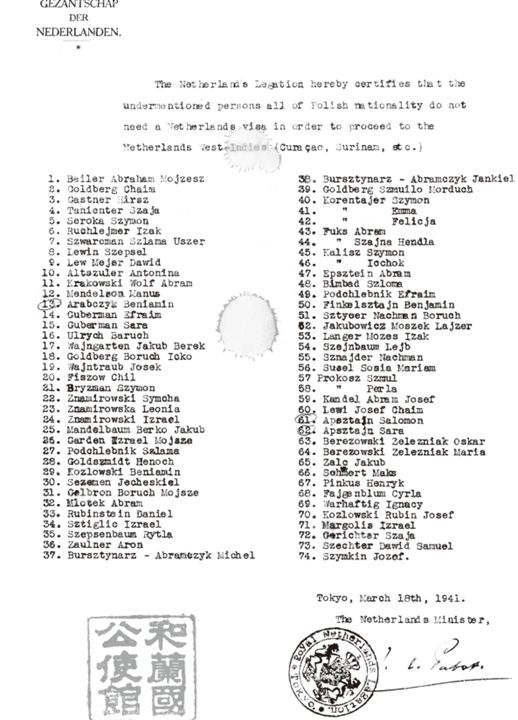
now shows the scale: of the seventy-four refugees refused at Tsuruga in March
1941 and readmitted on the Netherlands Legation's certificate,
thirty-five held no Sugihara visa at all (Mark Halpern's count against the
register). The archive records all of this as context for reconciliation — and passes no
verdict on any particular family's document.
The certificate and the seventy-four names →
Sources: the Netherlands Legation certificate, Tokyo, 18 March 1941 (Minister
J. C. Pabst), provided with analysis by Mark Halpern, August 2026; George Bluman on the
Metropol Hotel list; Chaim Goldberg's memoir as relayed by Halpern.
The seventy-four names, against the register
The certificate's names, cross-referenced line by line against Sugihara's register — the
comparison is the work of Mark Halpern, researcher. As the list below now
stands, forty lines match a register row and thirty-four do not. A link means
the name corresponds to a register line, spelling drift and all; “not on the register”
means exactly that and nothing more — many of the thirty-four crossed on visas from Saburo Nei
at Vladivostok, on purchased papers, or on documents this archive has not seen.
There is an account of how the rescue of these seventy-four was arranged, given to the archive by
the family of Nathan Gutwirth. By that telling, Gutwirth — himself already in Japan
— heard that a shipload had been refused at Tsuruga for want of Curaçao declarations or any other
proof of an onward destination, and was being sent back toward Vladivostok and the risk of Siberia.
He and his friend Lev Sternheim took his own Curaçao declaration to the Dutch consul
Niek de Voogd, who gave them a hundred blank sheets of consulate letterhead;
declarations were typed onto them at the Jewish community's offices. The ship's captain had promised
not to unload at Vladivostok if a radio message reached him before Soviet waters. It did; the ship
turned back, and the refugees landed at Tsuruga. The archive records this as the family's account and
not as a reading of its document: what it holds is the Legation's certification of the seventy-four
by name, and whether that is the paper described here or a further step after it is not settled.
Four of the forty rest on reading through damage: the register's own text loses the first
letter of a surname often enough that its rows are marked for it, so the line the link lands on
may look like a different name. Each of the four says what the register page actually reads.
- Beiler Abraham Mojzesz → No. 1427
- Goldberg Chaim · not on the register
- Gastner Hirsz → No. 1870
- Tanienter Szaja → No. 1375 (register row reads Lanienter)
- Seroka Szymon → No. 1918
- Ruchlejmer Izak · not on the register
- Szwaroman Szlama Uszer → No. 1824
- Lewin Szepsel → No. 1494
- Lew Mejer Dawid → No. 1455
- Altszuler Antonina · not on the register
- Krakowski Wolf Abram → No. 1674
- Mendelson Manus → No. 1869
- Arabczyk Benjamin · not on the register
- Guberman Efraim → No. 1956
- Guberman Sara · not on the register
- Ulrych Baruch → No. 1675
- Wajngarten Jakub Berek → No. 1354
- Goldberg Boruch Icko → No. 1601
- Wajntraub Josek · not on the register
- Piszow Chil · not on the register
- Bryzman Szymon → No. 1786
- Znamirowski Symcha → No. 1773
- Znamirowska Leonia → No. 1774
- Znamirowski Izrael · not on the register
- Mandelbaum Berko Jakub → No. 1432
- Garden Izrael Mojze → No. 1425
- Podchlebnik Szlama · not on the register
- Goldszmidt Henoch · not on the register
- Kozlowski Benjamin · not on the register
- Sezemen Jecheskiel → No. 1673
- Gelbron Boruch Mojsze → No. 2005
- Klotek Abram → No. 1937 (register row reads Mlotek)
- Rubinstein Daniel → No. 1523
- Sztiglic Izrael → No. 1922
- Szepsenbaum Rytla · not on the register
- Zaulner Aron · not on the register
- Bursztynarz-Abramczyk Michel → No. 1403
- Bursztynarz-Abramczyk Jankiel → No. 1594 · candidate; the given names differ (the register reads Abram). George Bluman identifies both Bursztynarz spellings on his list as real men — two brothers, 24 and 26, both of the Novaredoker Yeshiva in Białystok — and the certificate names exactly two.
- Goldberg Szmuilo Morduch → No. 1481 (register row reads Toldberg)
- Korentajer Szymon · not on the register
- Korentajer Emma · not on the register
- Korentajer Felicja · not on the register
- Fuks Abram · not on the register
- Fuks Szajna Hendla · not on the register
- Kalisz Szymon → No. 607
- Kalisz Icchok → No. 1013
- Epsztein Abram · not on the register
- Bimbad Szloma → No. 1344 (register row reads Zimbad)
- Podchlebnik Efraim · not on the register
- Finklesztajn Benjamin → No. 1428
- Sztyzer Nachman Boruch → No. 1976
- Jakubowicz Moszek Lajzer → No. 1861
- Langer Mozes Izak → No. 2032
- Szejnbaum Lejb → No. 1402
- Sznajder Nachman → No. 1462
- Susel Sosia Mariam · not on the register
- Prokosz Szmul · not on the register
- Prokosz Perla · not on the register
- Kandel Abram Josef · not on the register
- Lewi Josef Chaim · not on the register
- Apsztajn Salomon · not on the register
- Apsztajn Sura · not on the register
- Berezowski Zelezniak Oskar · not on the register
- Berezowski Zelezniak Maria · not on the register
- Zalc Jakub · not on the register
- Schmert Maks → No. 1558
- Pinkus Henryk → No. 1872
- Fajgenblum Cyrla → No. 1549
- Warhaftig Ignacy · not on the register
- Kozlowski Rubin Josef · not on the register
- Margolis Izrael → No. 1350
- Gerichter Szaja → No. 1367
- Szechter Dawid Samuel · not on the register
- Szymkin Jozef → No. 1702
One of the absences the archive can already account for. The three
Korentajer lines — Szymon, Emma and Felicja — are not on Sugihara's register
because Szymon's visa was not Sugihara's. It was No. 21 issued at
Vladivostok by Saburo Nei, Japan's acting consul there, a correction
established for this archive by Akira Kitade and recorded on the
corrections page. It is a worked example of what the thirty-four
generally are: people who crossed on a Japanese transit visa that was not written in Kaunas.
Netherlands Legation certificate, Tokyo, 18 March 1941 —
document and register comparison provided by Mark Halpern, researcher, August 2026; the
Korentajer identification per Akira Kitade (email; Emerging Heroes, p. 85); the
Gutwirth account from the Nathan Gutwirth family archive and his own memoir, relayed with his
grandson's assistance by Arlette Liwer-Stuip, August 2026.
The certificate itself →