Melamdowicz Icchok
Melamdowicz Icchok received transit visa no. 1768 at the Japanese consulate in Kaunas on 14 August 1940. Aged 37 in 1940.
Documents
Click a document to see it larger.
What the register records
- Nationality as recorded
- Polnisch
- Age in 1940
- 37
- Family, per the Kitade-Bluman list
- husband of #1758, child Leib (Leo) (8)
The journey
Reached Japan; aided by the Polish ambassador Tadeusz Romer; registered in Kobe for USA.
What is known
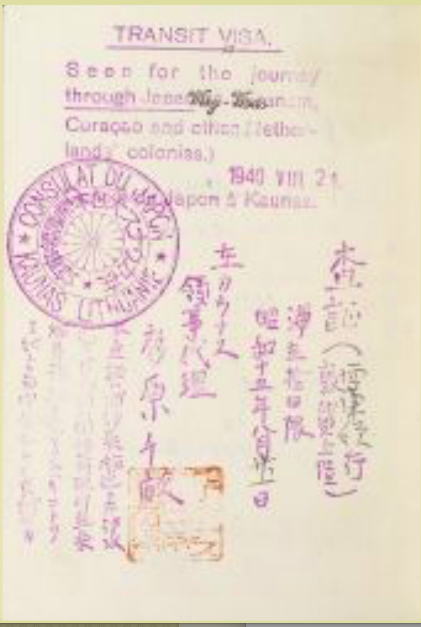
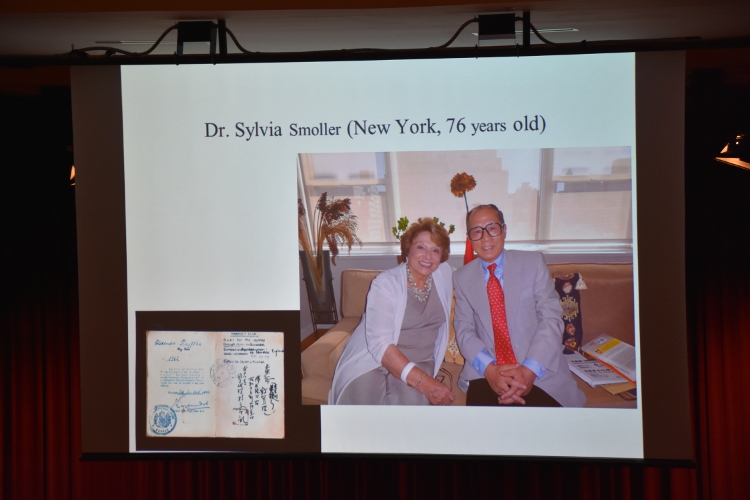
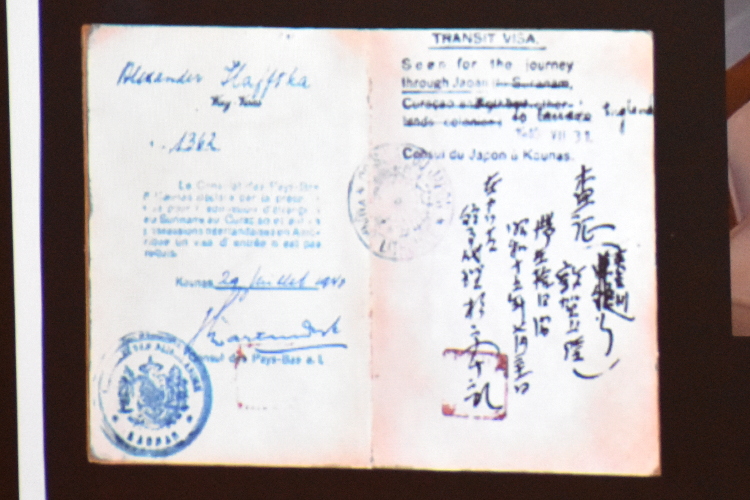
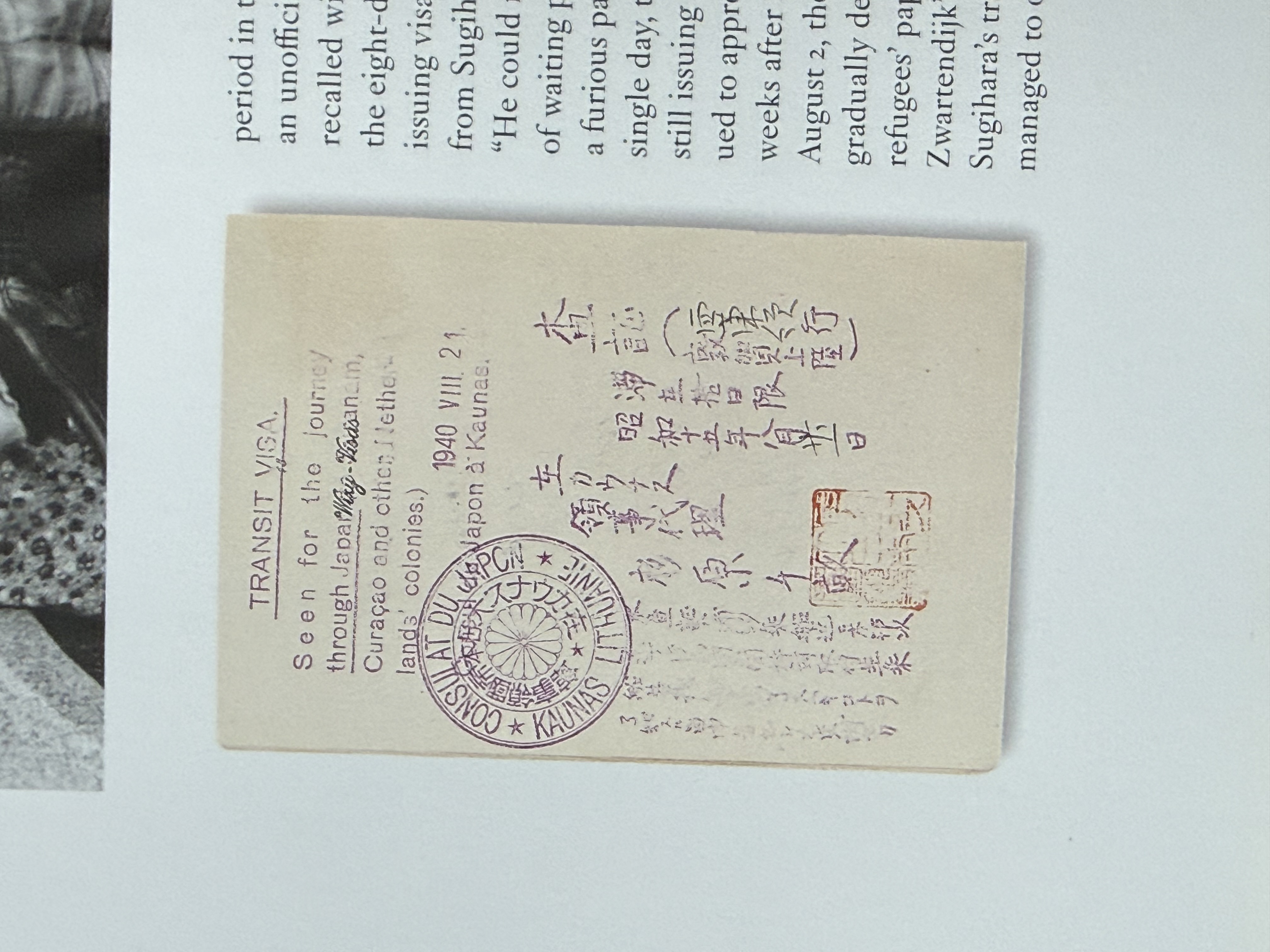
A Japanese transit visa stamp issued at the Consulate du Japon in Kaunas, Lithuania, dated 21 August 1940, permitting transit through Japan en route to Curacao and other Netherlands colonies. The stamp bears the Japanese consular seal and Japanese script; It is catalogued here under the name Leo Melamed, whose family escaped via Sugihara transit visas.
Icchok Melamdowicz, a Yiddish mathematics teacher and prominent Bundist in Bialystok, fled the city in September 1939, then to Vilna, later summoning his wife Fejga and son Lejb. After the Soviet seizure of Lithuania, the family received two of the last Sugihara visas (numbers 1758 and 1768) on August 14, 1940, despite lacking destination visas. They traveled via the Trans-Siberian railroad from Moscow to Vladivostok, by boat to Japan (Fejga and Lejb to Kobe, Icchok to Tokyo to obtain American visas), then sailed on the Hidaka Maru to Seattle, arriving April 18, 1941. Lejb's two grandmothers, aunt, and cousins remained behind and perished in the Holocaust, burned in a Bialystok synagogue…
A Sugihara transit visa was stamped in Icchok Melamdowicz's passport even though he had no actual Curaçao visa; Sugihara nonetheless used the Curaçao stamp at the top to legitimize the transit visa. The fine print required the bearer to complete arrangements for his final destination before boarding the ship at Vladivostok, but this step never actually occurred. Melamdowicz later became known as Leo Melamed of Illinois.
TRANSIT VISA Seen for the journey through Japan to Curacao and other Netherlands colonies. 1940 VIII 21 Japon a Kaunas. CONSULAT DU JAPON KAUNAS LITHUANIE
Polish passport for Icchok Melamedowicz issued at the Polish Consulate in Kovno September 26, 1939. It is stamped with a Sugihara transit visa, dated August 21, 1940, and also includes entry stamps for the U.S. and Canada. Renewed in Chicago, January 22, 1942. On August 14, 1940 the family received two of the last Sugihara visas (numbers 1758 and 1768), even though they did not have destination visas. Leo Melamed (born Lejb Melamdowicz) is the son of Fejga and Icchok Melamdowicz. He was born on March 20, 1932 in Bialystok Poland That April, the Melamdowicz family sailed from Japan to the United States on the Hidaka Maru and arrived in Seattle on April 18, 1941.
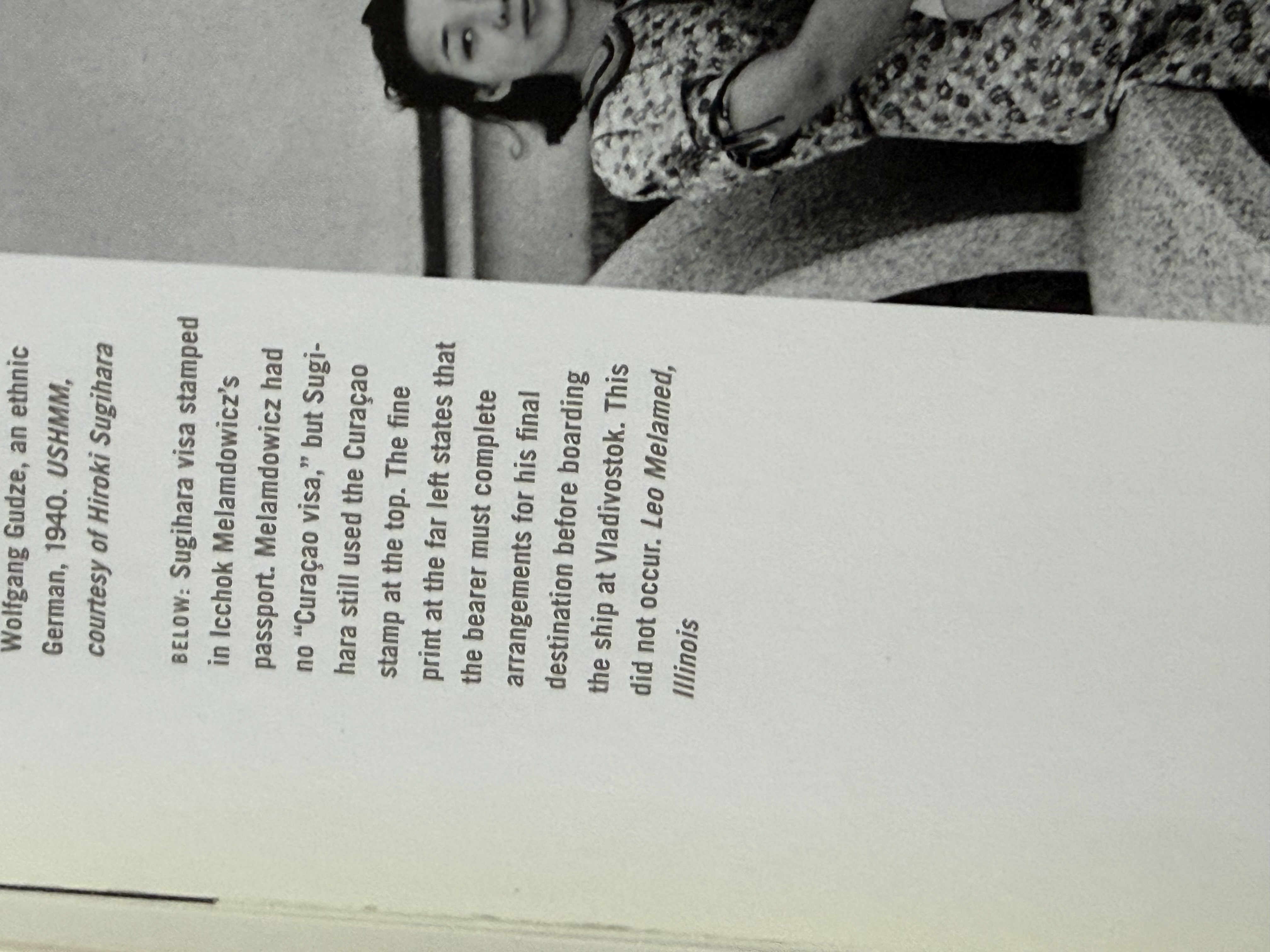
Sugihara visa stamped in Icchok Melamdowicz’s passport. Melamdowicz had no “Curaçao visa,” but Sugihara still used the Curaçao stamp at the top. The fine print at the far left states that the bearer must complete arrangements for his final destination before boarding the ship at Vladivostok. This did not occur.
Where this comes from
- List of Refugees, Vilna, 1940 — JDC Archives, New York, collection AR 33/44, file 00876. The contemporary register of Polish Jewish refugees in Lithuania, running to more than nine thousand numbered entries; the fullest independent check…
The 1940 Vilna refugee list has, at entry 3724, Icchok Melamdowicz, born 1904 at Białystok, who had come from Białystok; the year agrees with the register's age and Białystok agrees with the archive's other records. - The JEWCOM register — the refugee register kept by the Refugee Committee of the Jewish Community of Kobe (Ashkenazim) at No. 6 Yamamoto-dori, 1-chome, whose cable address was 'JEWCOM Kobe'. Eighty-four pages on the committee's own printe…
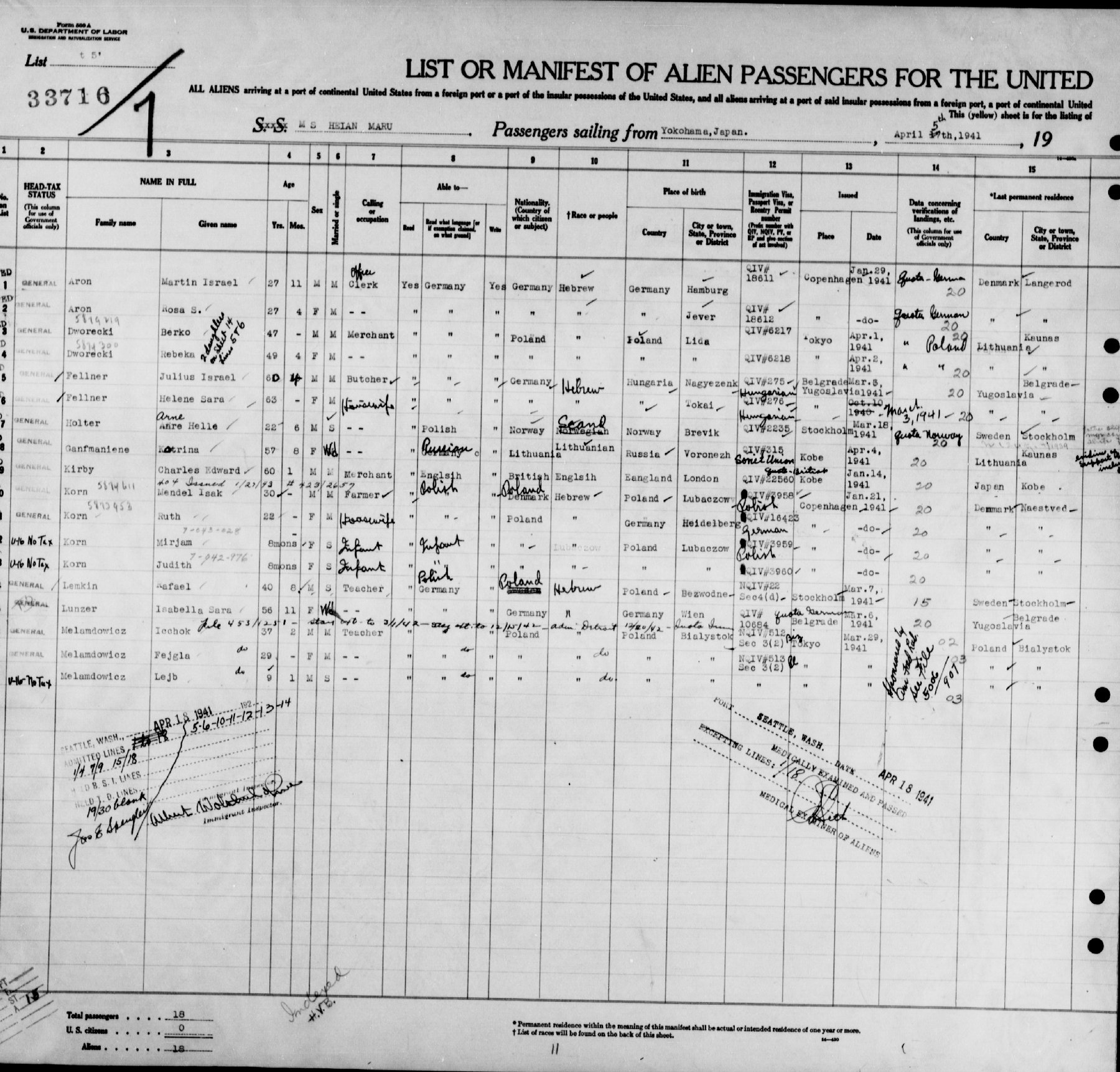
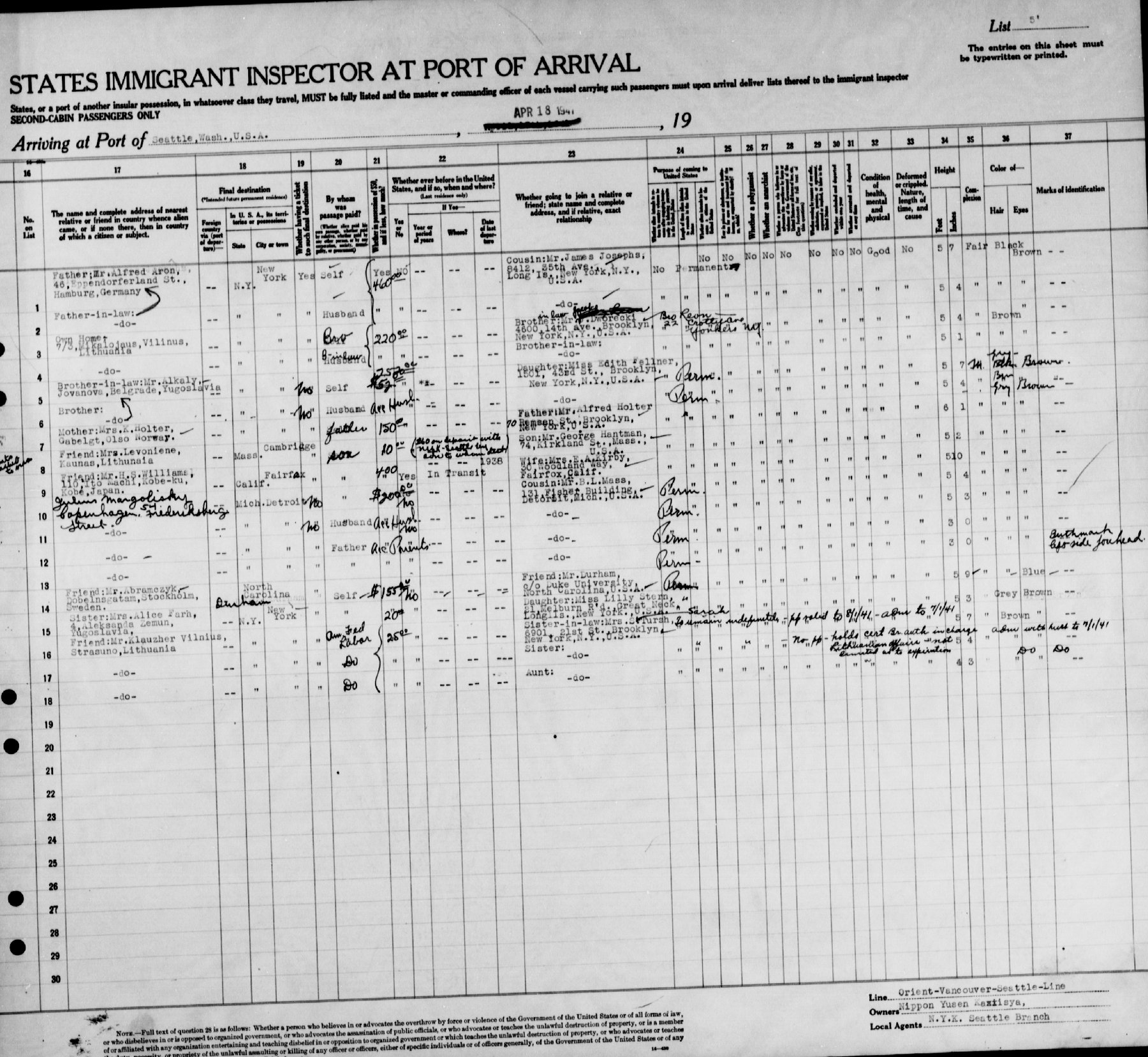
Entry 455 of the Kobe Jewish Community's refugee register: aged 37, born at Bialystok, a teacher, who arrived in Japan from Vilnius on 2 February 1941. - US arrival manifest: Icchok Melamdowicz, Seattle, 1941
"Seattle Passenger Lists", FamilySearch, entry for Icchok Melamdowicz, 1941. Ship: Heian Maru. Matched from the Heian Maru's Polish-born passenger list (198 people, of whom 57 matched the register). Register No.1768 'Melamdowicz Cichok' records age 37; the manifest gives born 1904, arriving 1 - United States Holocaust Memorial Museum, Holocaust Survivors and Victims Database — the Flight and Rescue electronic dataset (source 20725): USHMM's own transcription of the Kaunas register, 2,140 persons with citizenship, visa type, iss…
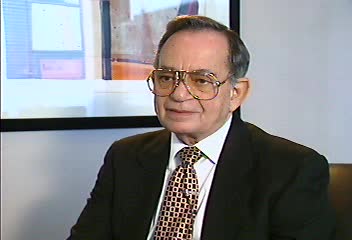
USHMM Flight and Rescue dataset: arrived in Japan 2 Feb 1941 (line 1768) - Oral history interview with Leo Melamed (born Melamdovich) — USC Shoah Foundation Visual History Archive, interview 18102. Catalogue: born Mar 20 1932, Białystok (Białystok, Poland); born Bialystok 20 Mar… — the interviewee may be living
USC Shoah Foundation VHA interview 18102: Leo Melamed (born Melamdovich) — son of the visa holder — gave a testimony (catalogue: born Mar 20 1932, Białystok (Białystok, Poland)); born Bialystok 20 Mar 1932; the Melamdowicz family, No.1768 - USHMM pa1110057: Wooden crayon case given to Lejb Melamdowicz (now Leo Melamed) while studying at a Japanese school.
The United States Holocaust Memorial Museum's biography of Leo Melamed — born Lejb Melamdowicz at Białystok on 20 March 1932, son of Icchok and Fejga — states the family's transit visa numbers outright: 1758 and 1768, issued on 14 August 1940. Those are these two lines of the register, and both carry that date. The register enters them as husband and wife and its companion notes record a child, Leib (Leo), aged eight. This is an identification made on a number rather than on a name. The archive would ordinarily go no further than a spelling — the register writes Melamedowicz on one line and Melamdowicz on the other — but a family that states its own visa numbers, and a register that agrees on both numbers and the date, is a different order of evidence. - Port of Humanity Tsuruga Museum, correspondence of 3 September 2026 (Mami Yamada) — the provenance of the Melamed visa facsimile shown i… — so this archive reached the same identification independently and later, rather than supplying it.
How the facsimile of this visa reached Tsuruga, established by the museum at the archive's request. The Port of Humanity Tsuruga Museum went back to its first director and reports that the images were given to Tsuruga City directly by Leo Melamed — the visa holder's son — in correspondence with him, and not through any intermediary. The museum had already identified the visa as this man's, and had held the images since before 2014; this archive arrived at the same identification separately and afterwards. Given by Mami Yamada, Port of Humanity Tsuruga Museum, 3 September 2026. - "Washington, King, Seattle, Passenger Lists, 1890-1957", FamilySearch — index entry for Icchok Melamdowicz, 1941: born about 1904, Poland. Digitised from NARA microfilm publication M1383 (passenger and crew lists of vessels arriving at S…
FamilySearch's index of the Seattle passenger lists, read by the archive on 20 September 2026, has Icchok Melamdowicz, born about 1904 in Poland, arriving at Seattle in 1941. The register's compiled line gives 1903, and the two are 1 year apart. The name occurs once on the register, and a Polish-born passenger landing at Seattle in 1941 fits the route through Japan, so the entry is taken as this person's under the archive's rule of 19 September 2026 for records from the route. - JDC Archives, New York, collection AR 33/44 file 53 (the Jewish Community of Kobe's returns to the JDC, 1941; Set I, item 00761) — Set I pp. 24–32 — April 1941 (and a May continuation sheet)
He left Yokohama on the Asama Maru on 26 April 1941, bound for the USA (the Jewish Community of Kobe's list of refugees who left Japan in April 1941 (JDC Archives, AR 33/44 file 53)). The list reads: "Melamdowicz Icchok, ″ Fajga, ″ Lejb (Asama Maru, 26th)". (Asama Maru, Yokohama, 26 April 1941, the USA.) - The Sugihara transit visa of 21 August 1940 of the Melamdowicz family.
- Collections Search - United States Holocaust Memorial Museum
- A book page with the caption to the Sugihara visa stamped in Icchok Melamdowicz's passport (No. 1768), lent by Leo Melamed, Illinois, and a photograph of Wolfgang Gudze, 1940, courtesy of Hiroki Sugihara.
- A book page reproducing the Sugihara transit visa of 21 August 1940 of Icchok Melamdowicz (No. 1768).
- Honolulu Festival 2017 report, 'Inspiring Story of Chiune Sugihara — Visas for Life' (Kitade keynote, 11-12 Mar 2017): Leo Melamed, chairman emeritus CME Group, Chicago
and 5 further records, shown on the full entry.
Open this entry in the full register →