Berl Schor
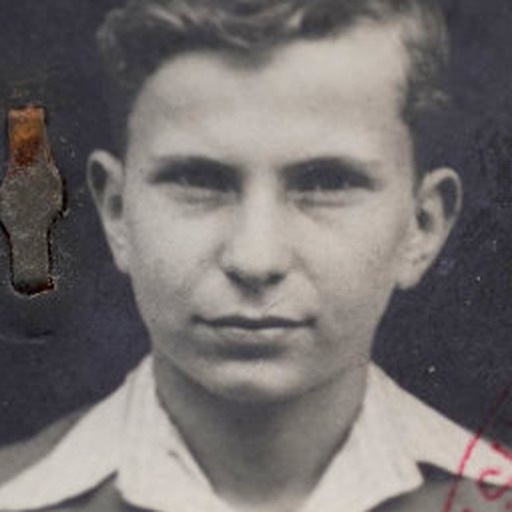
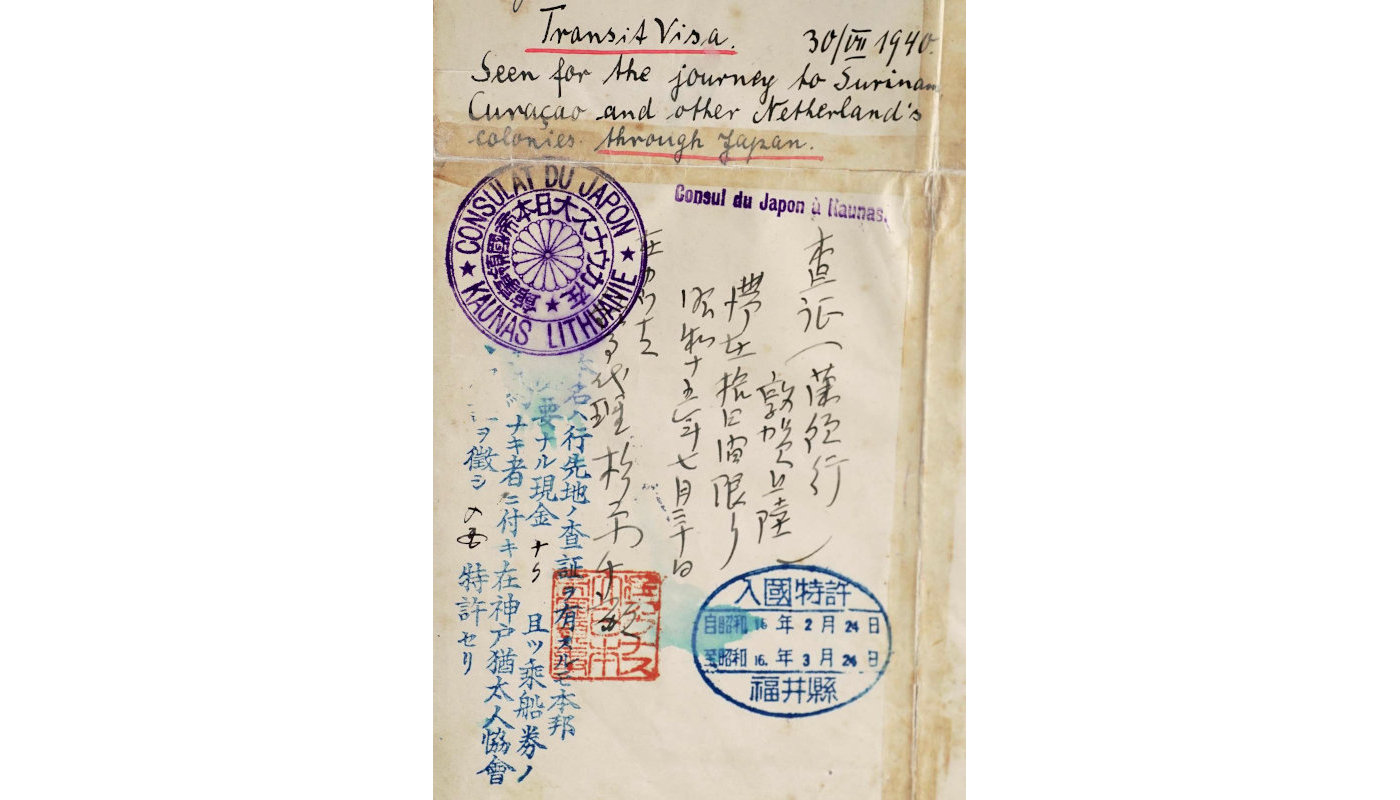
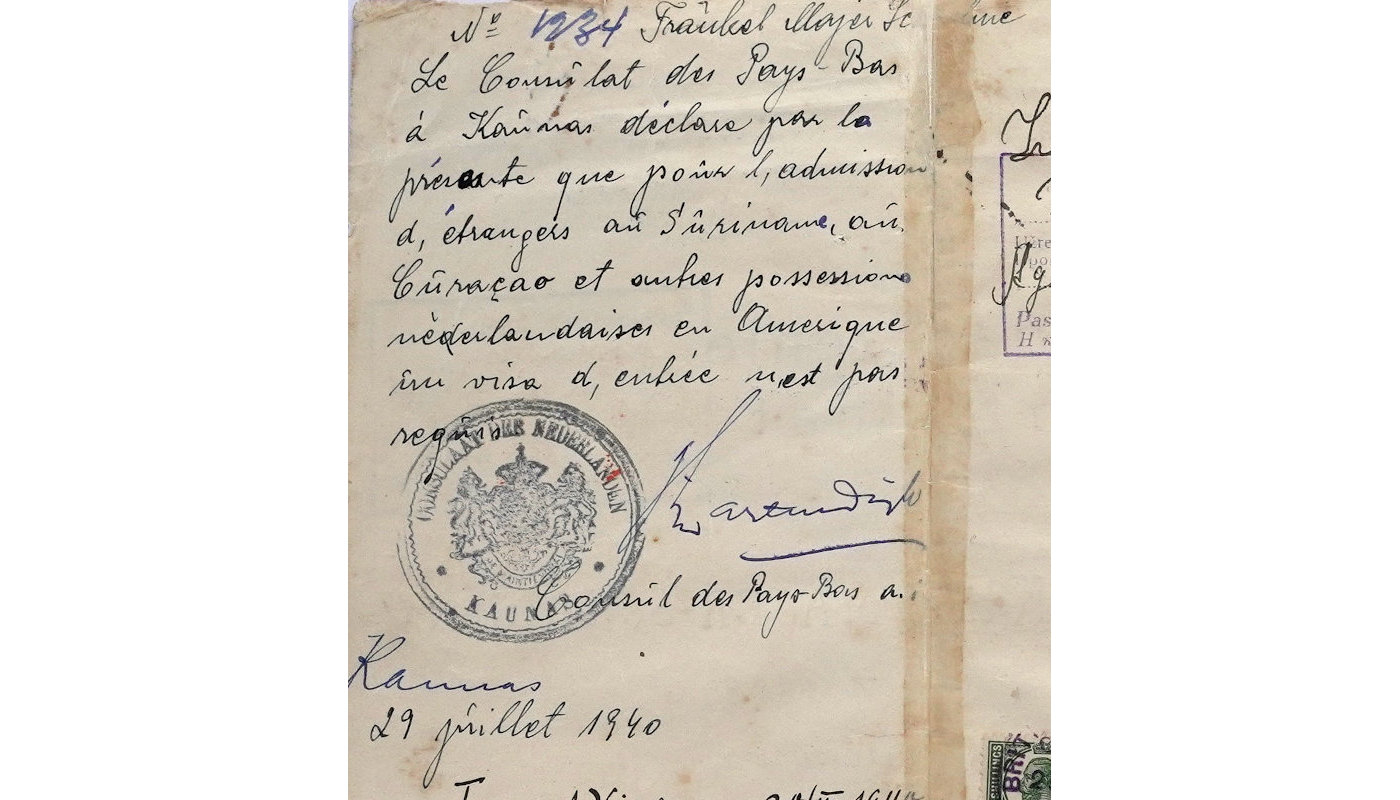
Berl Schor received transit visa no. 77 at the Japanese consulate in Kaunas on 29 July 1940. The register records scholar, aged 12.
Documents
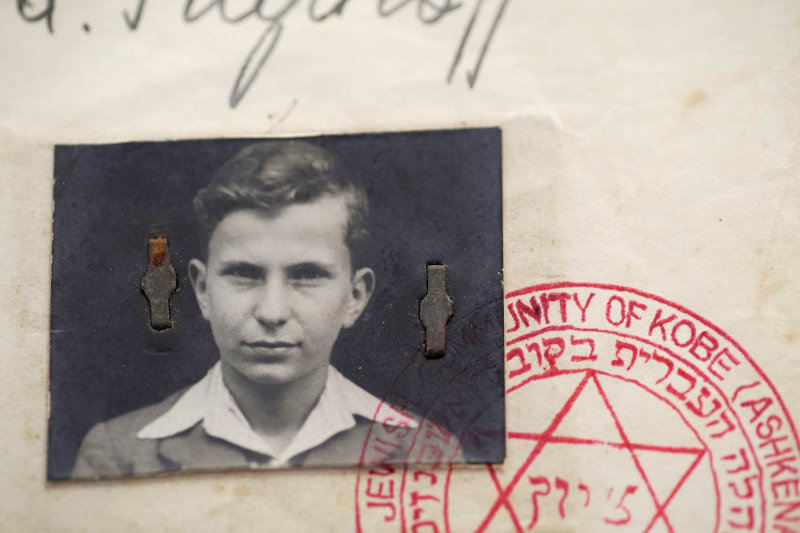
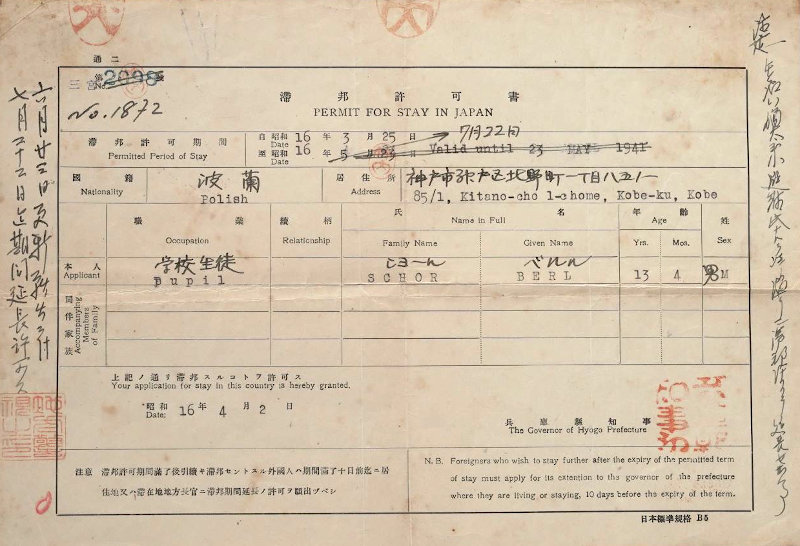
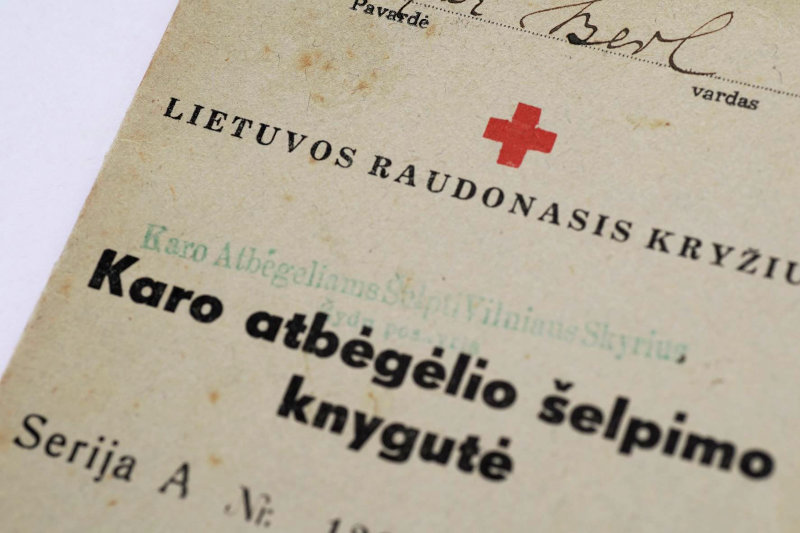
Click a document to see it larger.
What the register records
- Nationality as recorded
- Polnisch
- Age in 1940
- 12
- Occupation
- Scholar
The journey
Reached Japan; aided by the Polish ambassador Tadeusz Romer; registered in Kobe for New Zealand.
What is known
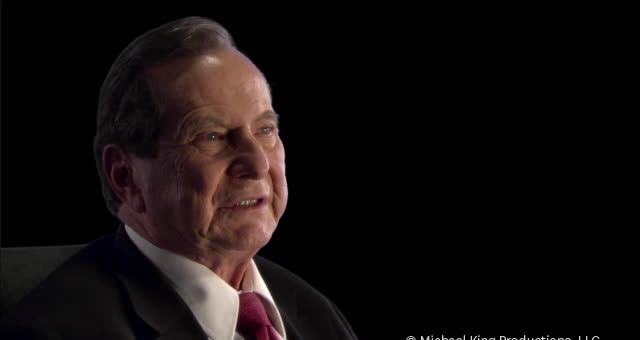
Berl Schor, a Sugihara survivor, described the astonishing fact that about 5,000 Jewish refugees were allowed to leave the Soviet Union. He noted that refugees did not know they were going to Kobe until reaching Vladivostok, where a member of the Jewish Community of Kobe informed them they would travel from Tsuruga to Kobe.
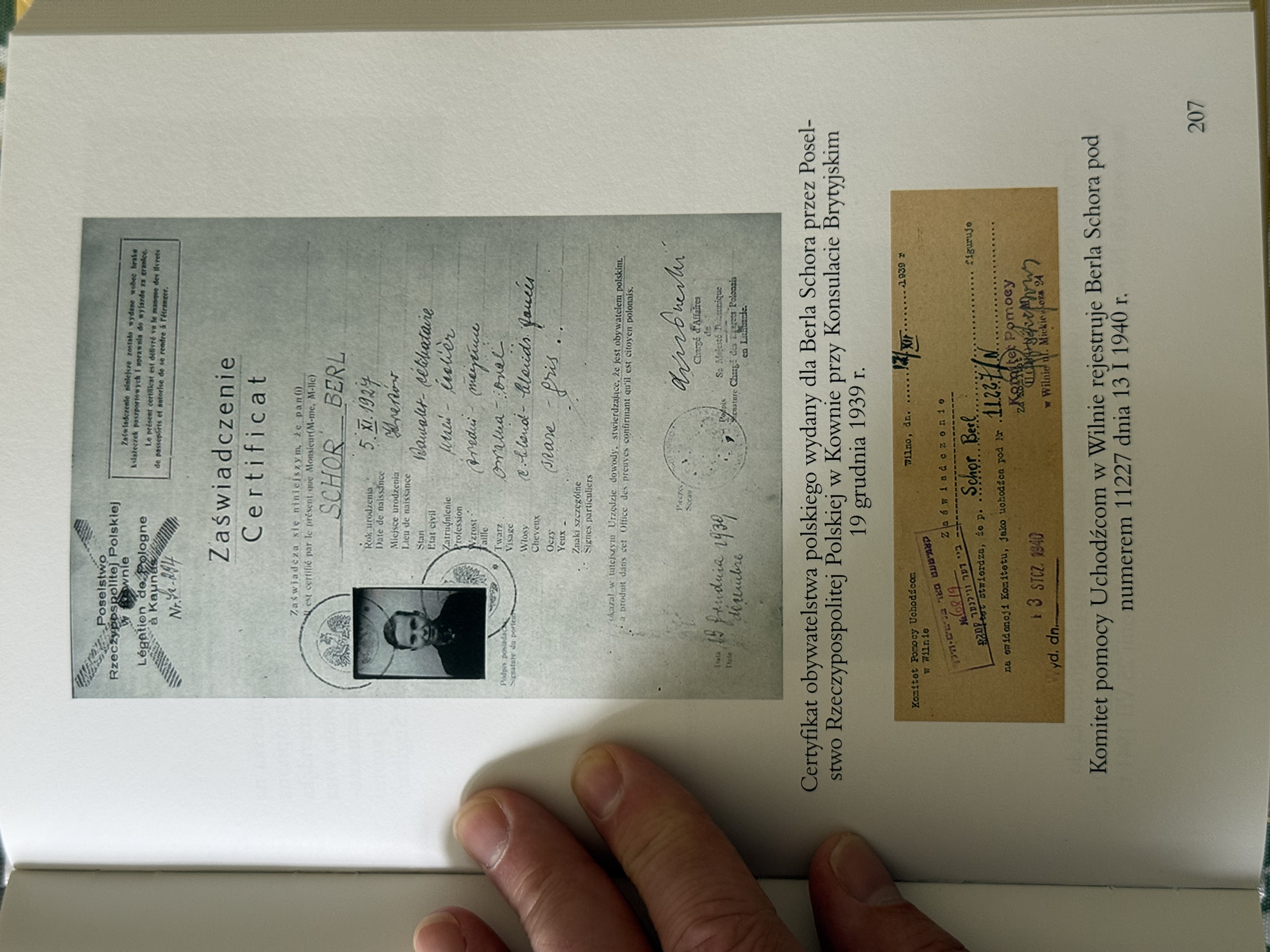
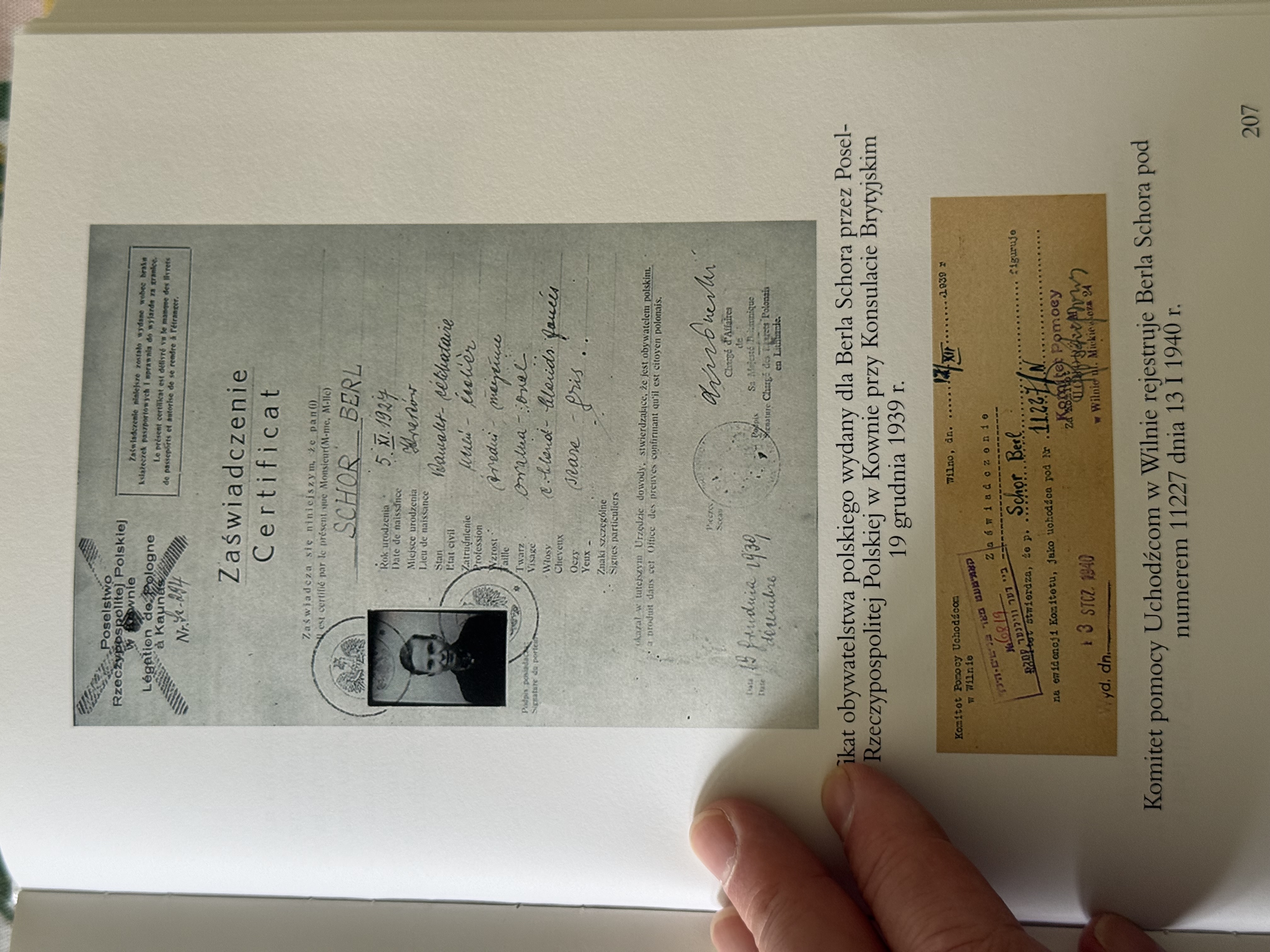
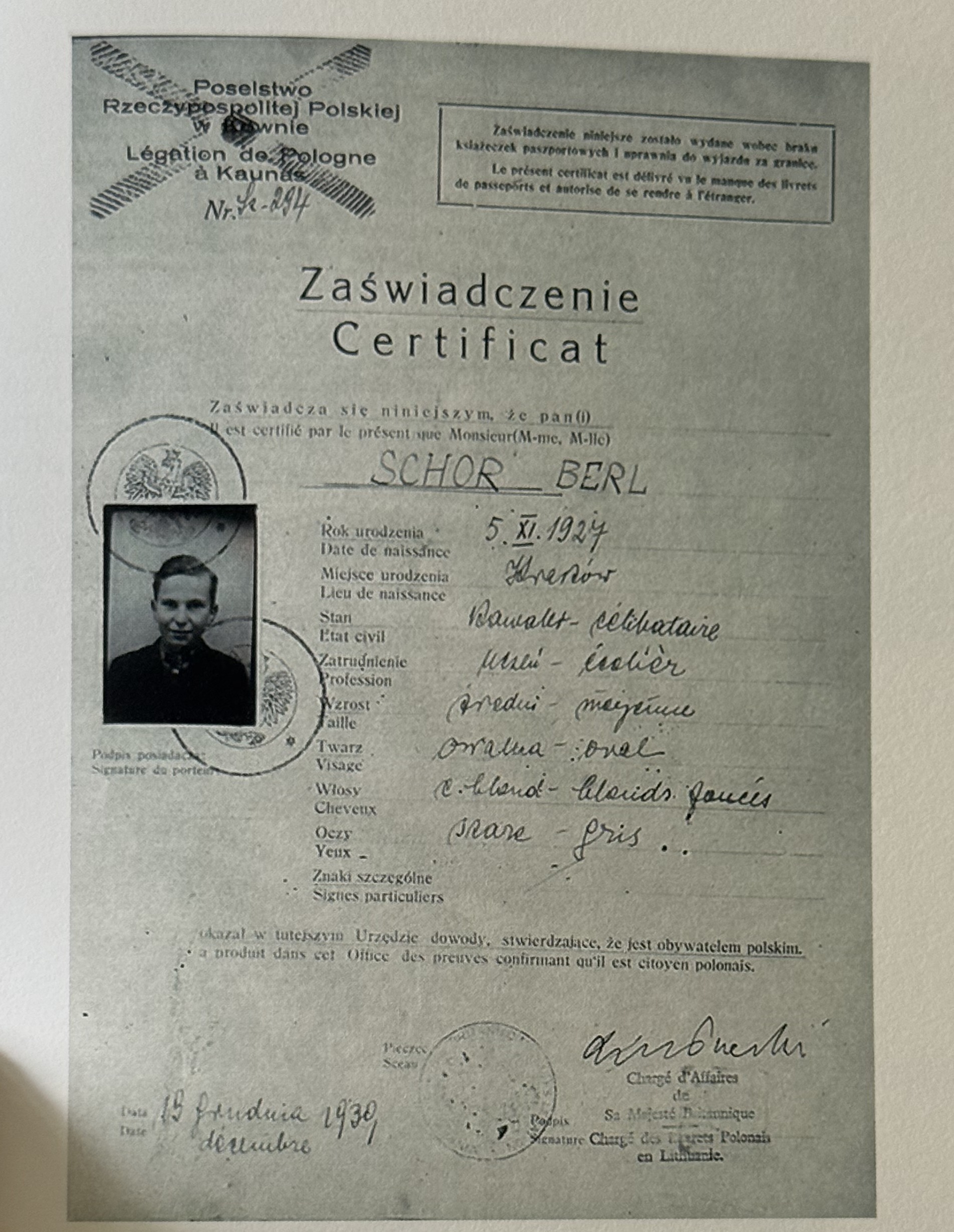
This is a certificate (Zaświadczenie/Certificat) issued by the Polish Legation in Kaunas on 19 December 1939 to Berl Schor, a Polish citizen born 5 November 1927, certifying his Polish nationality in lieu of a passport so that he could travel abroad. The document, part of a larger collection related to Sugihara-era refugees passing through Kaunas, does not itself bear a Sugihara Japanese transit-visa stamp, but reflects the bureaucratic steps Polish-Jewish refugees like Schor took while seeking to escape German-occupied territory via Lithuania.
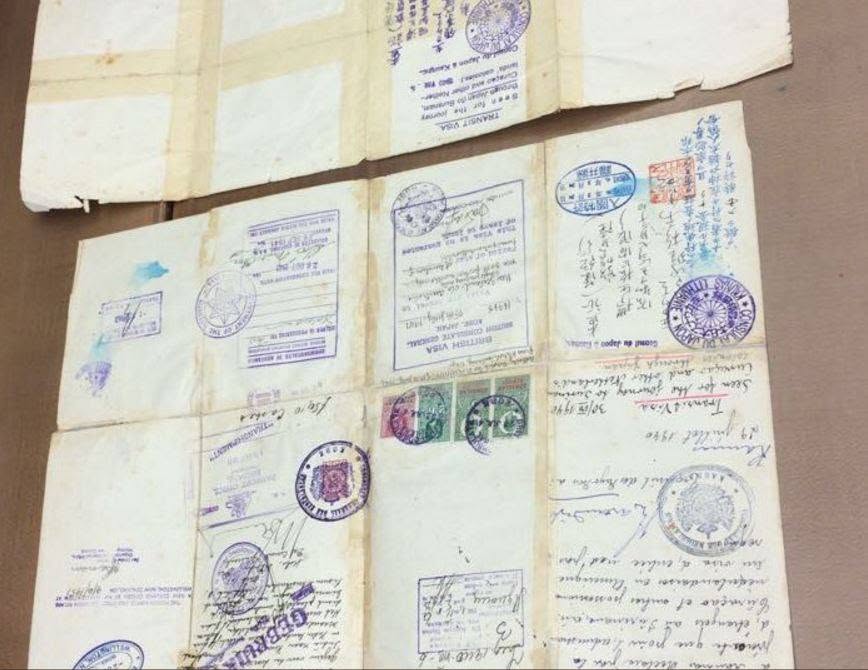
Beryl (Berl) Schor, identified as survivor No.77, is shown displaying his original Sugihara transit visa documents—including a Dutch 'Curaçao' visa stamp and a Japanese transit visa—to a delegation of Japanese Ministry of Foreign Affairs officials at Yad Vashem. The visas, dated around July 1940, trace the route he used to escape Nazi-occupied Europe through Kaunas, Lithuania, via Japan. The post also notes that a street in Netanya, Israel was named after Chiune Sugihara in 2016 in his honor.
The most unbelievable event was the fact that about 5,000 Jewish refugees were allowed to leave the Soviet Union. As far as I know, there has never been another time before or after Stalin's rule that such a large group of people was allowed to leave one of the Soviet republics.
SCHOR BERL 5.XI.1927 Bawalet-célibataire a produit dans cet Office des preuves confirmant qu'il est citoyen polonais.
Transit Visa 29 juillet 1940 Seen for the journey through Japan to Curaçao and other Dutch Colonies
Where this comes from
- List of Refugees, Vilna, 1940 — JDC Archives, New York, collection AR 33/44, file 00876. The contemporary register of Polish Jewish refugees in Lithuania, running to more than nine thousand numbered entries; the fullest independent check…
The 1940 Vilna refugee list has, at entry 6819, Berl Schor, born 1927 at Krakow, who came from Krakow; the year agrees with the register's compiled age, and the town with what the archive already holds for this line. - The Kobe relatives list — refugees at Kobe in 1941 recorded with their relatives abroad. Seventy-six pages in numbered sheets (LIST No. 7, No. 16 and others), each line giving a name, age, birthplace, occupation and citizenship, and then…
Entry 241 of the Kobe community's list of refugees and their relatives abroad: born 1927 at Krakow. - The JEWCOM register — the refugee register kept by the Refugee Committee of the Jewish Community of Kobe (Ashkenazim) at No. 6 Yamamoto-dori, 1-chome, whose cable address was 'JEWCOM Kobe'. Eighty-four pages on the committee's own printe…
Entry 604 of the Kobe Jewish Community's refugee register: aged 14, born at Krakow, a scholar, who arrived in Japan from Vilnius on 24 February 1941. - "List of persons arriving on route to New Zealand" — the arrival roster for the sailing from Japan, September 1941: 33 typed names, from Dr George Bluman’s own marked-up cop… — September 1941, not July; he had misread his own handwriting.
Named on the list of persons arriving on route to New Zealand, sailing from Japan in 1941. Twelve years old; the ledger has him as Berl Schor. - United States Holocaust Memorial Museum, Holocaust Survivors and Victims Database — the Flight and Rescue electronic dataset (source 20725): USHMM's own transcription of the Kaunas register, 2,140 persons with citizenship, visa type, iss…
USHMM Flight and Rescue dataset: arrived in Japan 24 Feb 1941 (line 77) - Oral history interview with Berl Schor — USC Shoah Foundation Visual History Archive, interview 58061. Catalogue: born Jan 1 1927, Kraków (Kraków, Poland); born Krakow 1 Jan 1927; Bluman: No.77 Berl Schor,… — the interviewee may be living
USC Shoah Foundation VHA interview 58061: Berl Schor — the interviewee himself — gave a testimony (catalogue: born Jan 1 1927, Kraków (Kraków, Poland)); born Krakow 1 Jan 1927; Bluman: No.77 Berl Schor, scholar, 12 — the Romer page's 'Scher Berl, to New Zealand' - Certificate of Polish citizenship No. S-207, issued to Berl Schor by the Legation of the Polish Republic at Kaunas, at the British Consulate, on 19 December 1939, reproduced on a page of Aleksander B. Skotnicki's Chiune Sugihara. Konsul,…
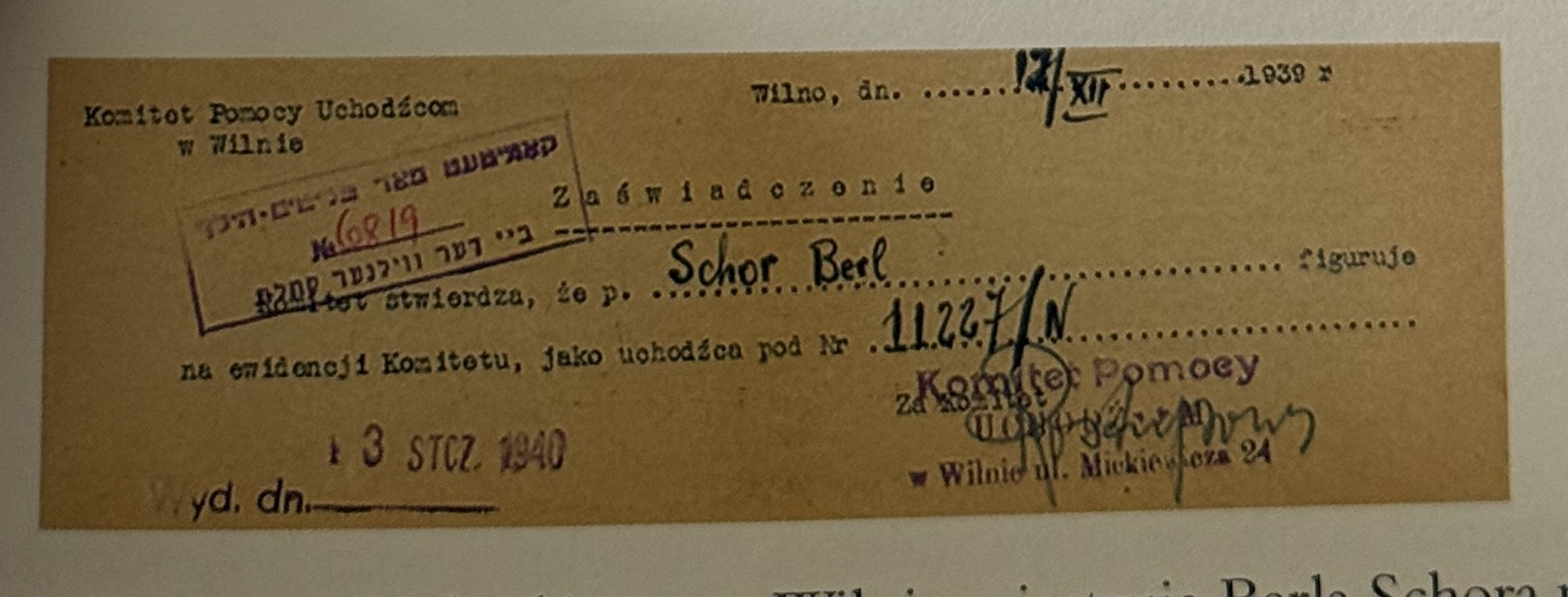
The certificate names Berl Schor and gives his birth as 5 November 1927, which agrees with the register's age of 12 in 1940 - he turned thirteen that November. His occupation is entered as schoolboy, and the register records him as a scholar. The refugee committee's slip printed below it places him at Vilna in December 1939 and gives his number on the committee's rolls. - Takayoshi Iwata, "Kobe and Jewish Refugees" (神戸とユダヤ難民), Kobe City history bulletin no. 26, March 2017 — English translation published by the City of Kobe
He was thirteen when he reached Kobe in February 1941, travelling with his sister Perla's family, and he stayed until August, living at 1-85 Kitano-chō in a house set aside for refugees, seven to a room. In his memoir he recalls a Japanese boy who became a true friend without a common language. (Takayoshi Iwata, 'Kobe and Jewish Refugees', Kobe City history bulletin no. 26 (2017), English translation published by the City of Kobe.) - Takayoshi Iwata, "Kobe and Jewish Refugees" (神戸とユダヤ難民), Kobe City history bulletin no. 26, March 2017 — English translation published by the City of Kobe
- Ritoja.lt — personal archive of Berl Schor (Sugihara transit visa, Kobe stay permit)
- Owner's ephemera collection (photographed Jul 2026): Flight and Rescue catalog pages (Soltz cert — Mrs. Shmuel Soltz, Israel; Nowogrodzki spread — full name Markus-Chaim, US non-immigrant visa No.4 of 20 Jul 1940, Soviet visa 114477, Sea…
- Berl Schor — Polish Legation certificate Nr. S-294 (19 Dec 1939), cropped from book p.207
- Project Interchange / Asia Pacific Institute (FB): Japan MFA officials' delegation at Yad Vashem meets BERYL (BERL) SCHOR, No.77 — the survivor shows his Sugihara transit visas; Netanya's Sugihara street (2016) noted
- Berl Schor — Vilna Refugee Aid Committee registration No.11227 (13 Jan 1940), cropped
and 4 further records, shown on the full entry.
Open this entry in the full register →